| Berlin | Leipzig | Munich | Stuttgart | Trier | Ulm |
Leipzig and Leibniz
|
| Leibniz at the Univ. of Leipzig |
|
- He finished his college degree at the Univ. of Leipzig when he
was 16 years old. He wanted to continue at the same university
in order to study law, but his application was rejected. Thus,
he had to wonder around the world. His main interest was in
philosophy worrying about how God is managing this world.
- In 1672, Leibniz met Christian Huygens in Paris and became
interested in physics. I do not know whether he met Isaac
Newton who was born three years earlier in 1643,
Presumably, as a philosopher, he was worrying about how God would divide up this world, and reconstruct it. Leibniz was a philosopher who could do mathematics. He changed the world. Click here for what Karl Marx said about the philosophers.
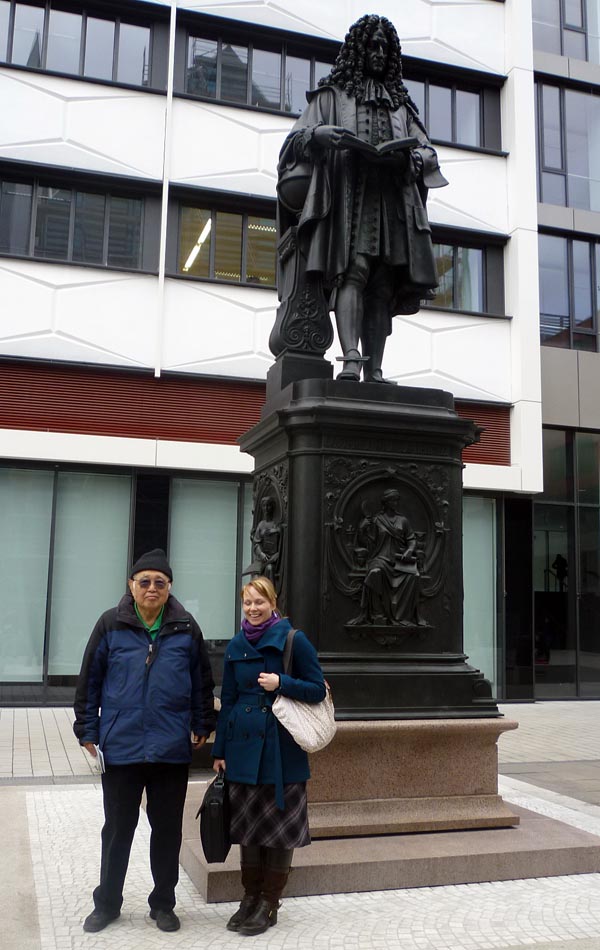
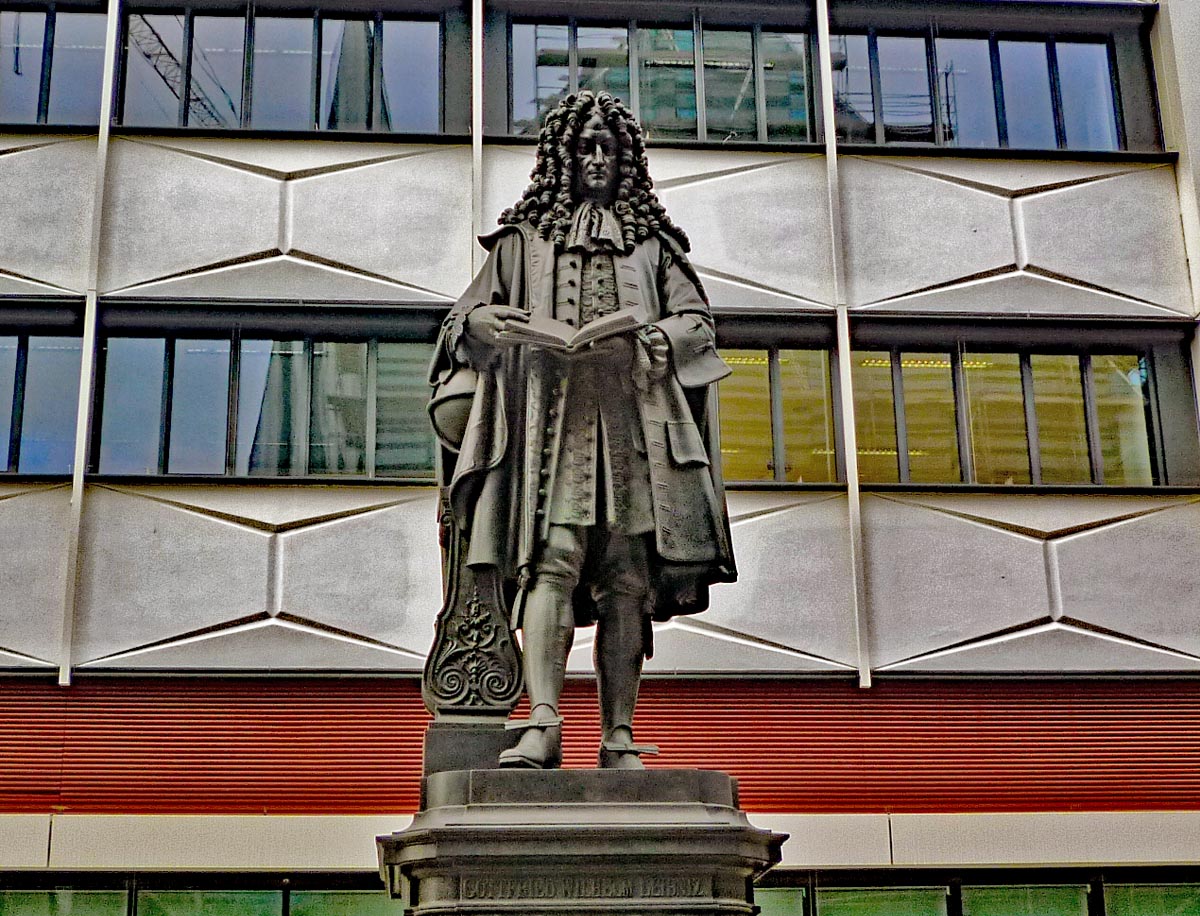
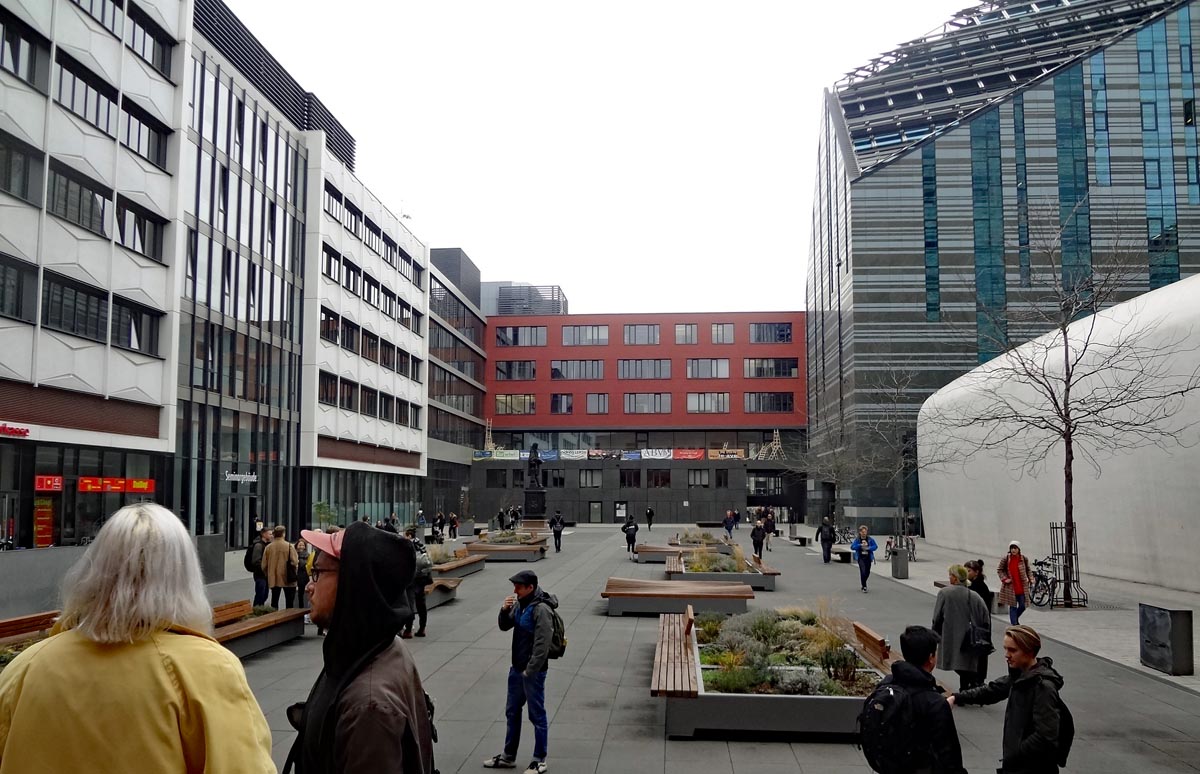
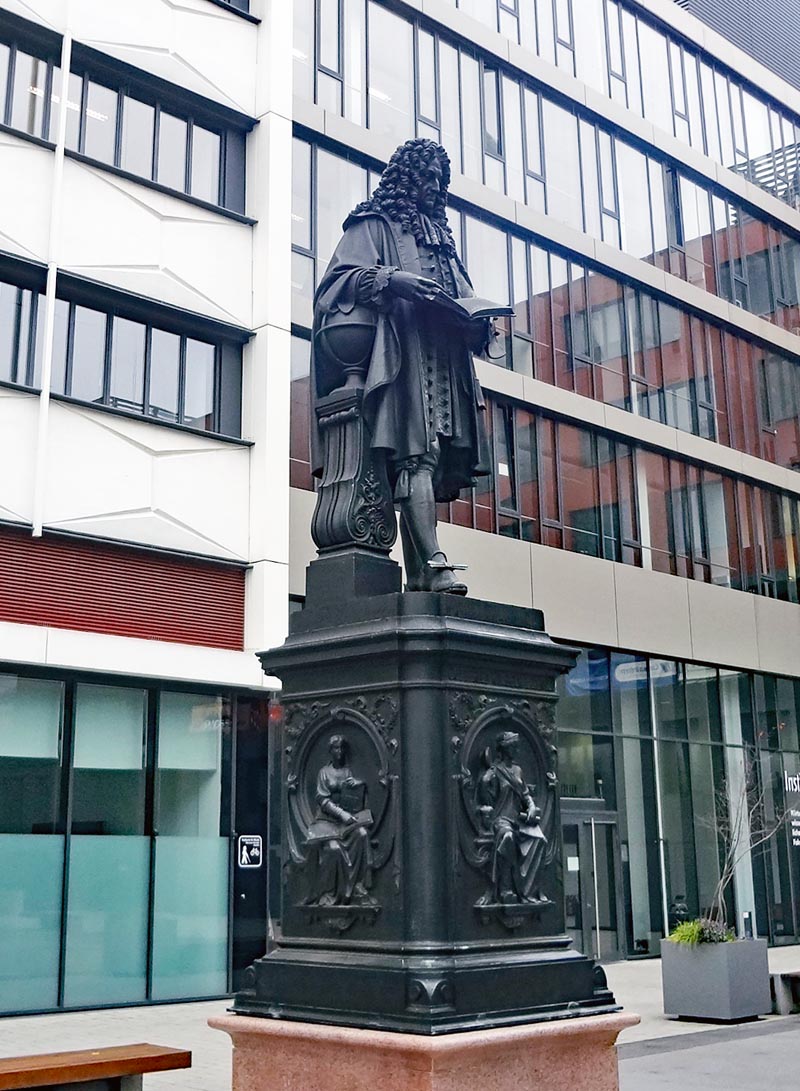
- His statue is at the quadrangle of the main campus of
the Univ. of Leipzig.
Click here for the
statue.
- The University of Leipzig is one of the oldest universities in
the world. It provided excellent educations to many people
who made positive contributions to this world. Let us list some
of the names we can easily recognize.
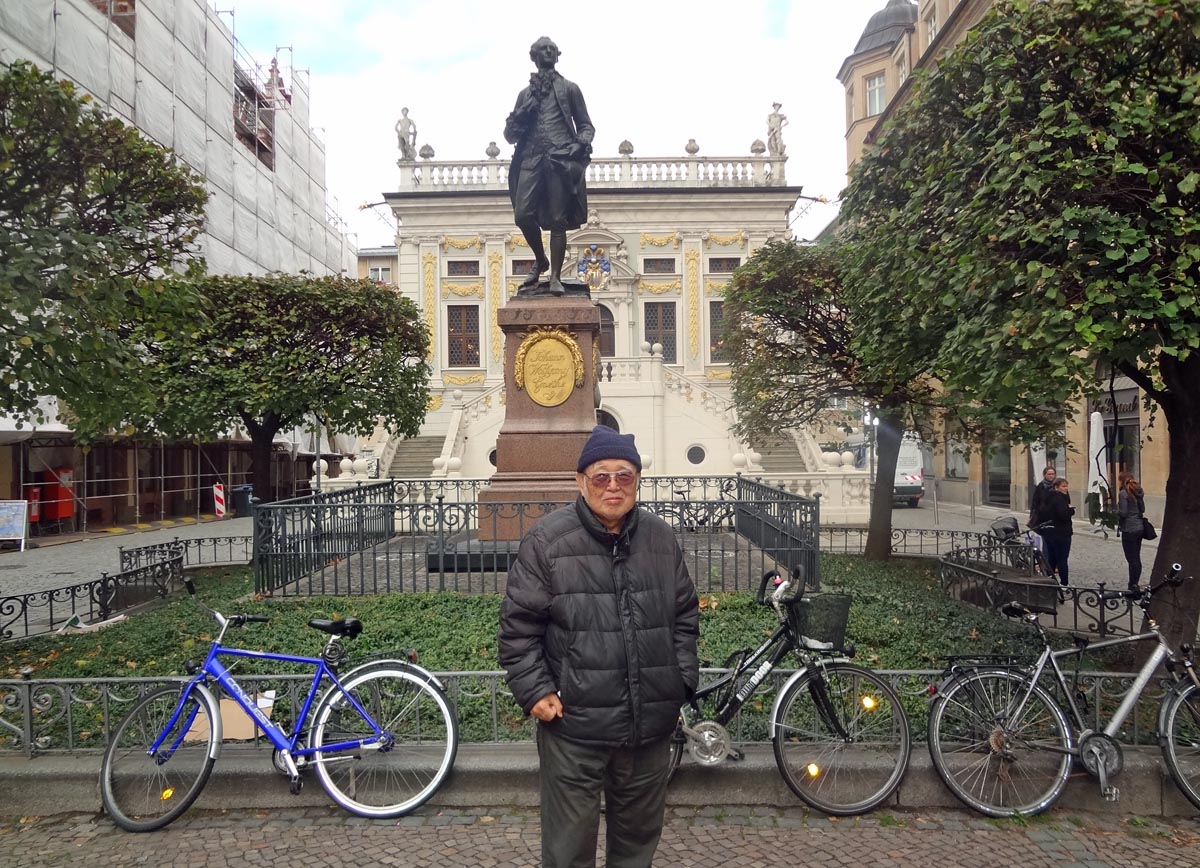
Johann Wolfgang von Goethe was born and raised in Frankfurt, but he studied at the Univ. of Leipzig. 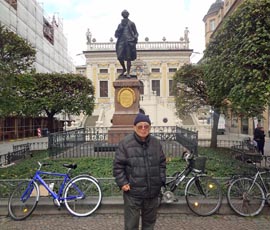
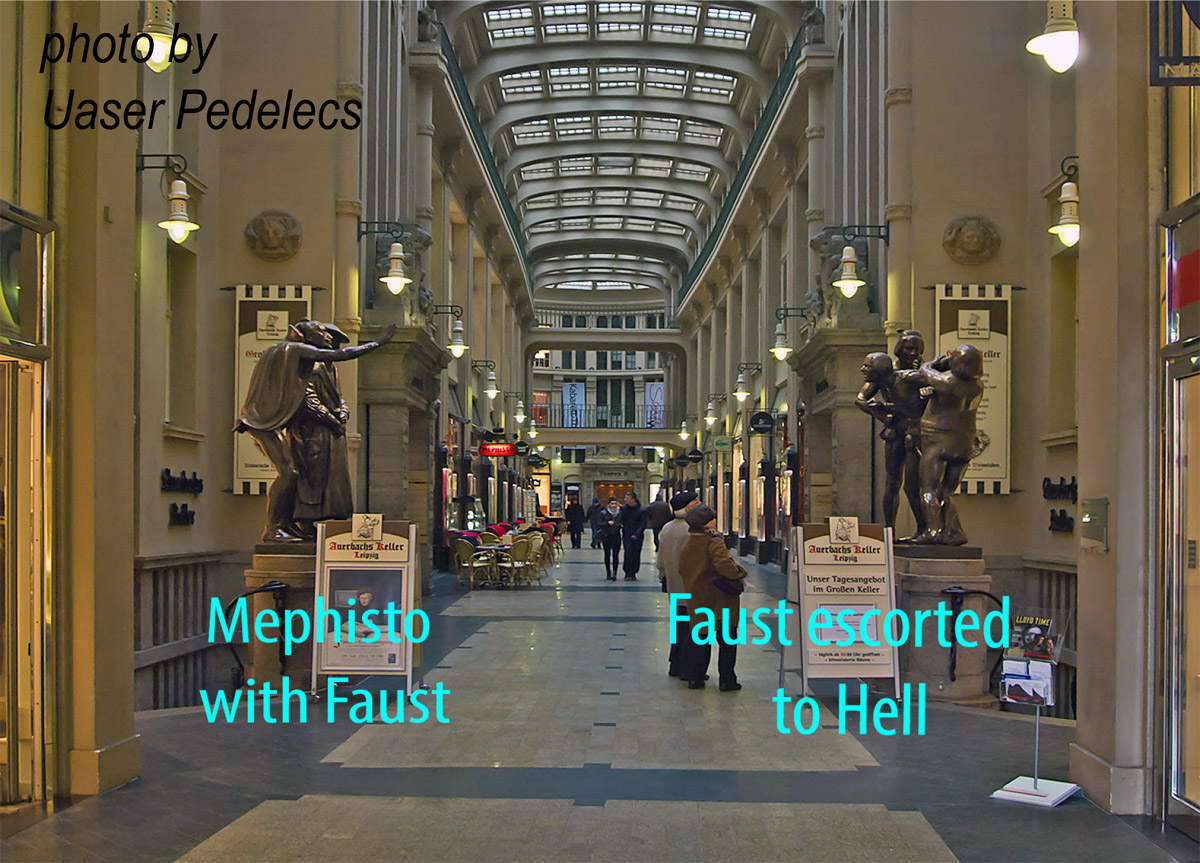
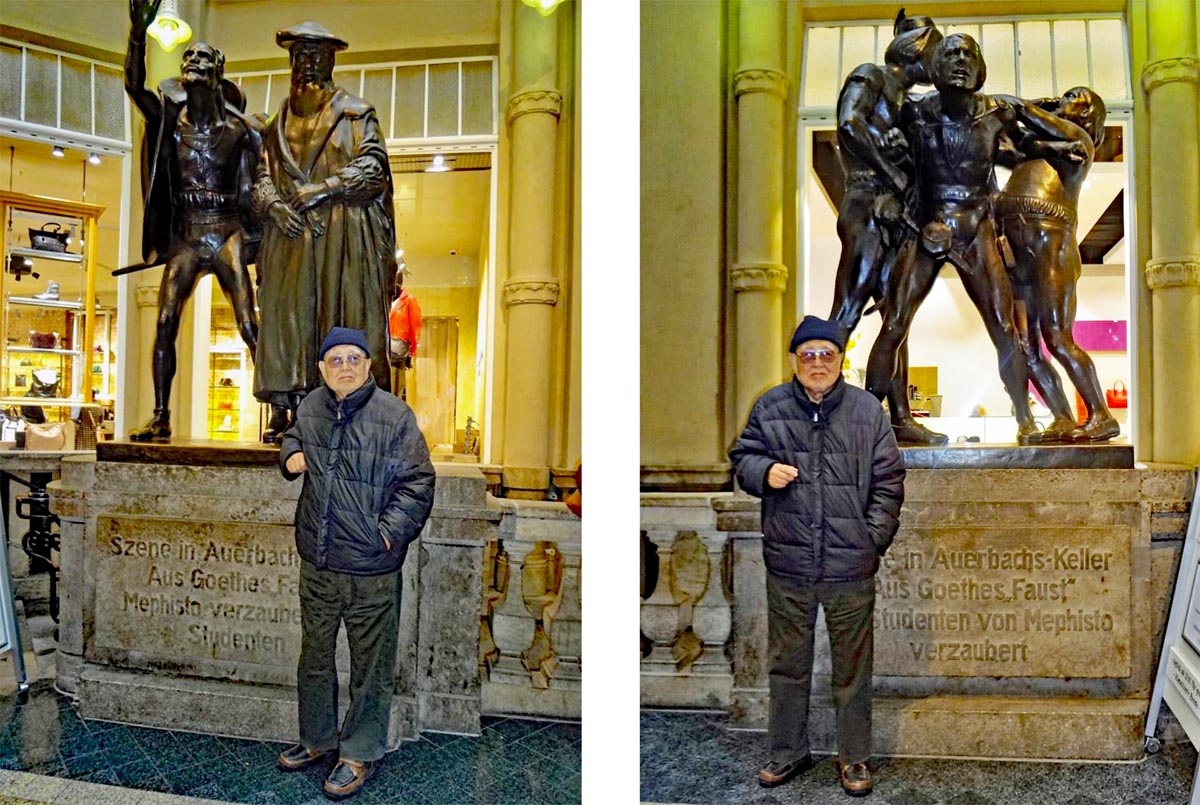
Goethe's statue in Leipzig. There is a covered street facing this statue, with two statues of Goethe's Faust. 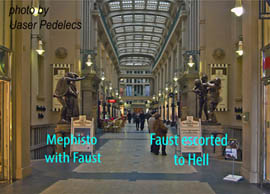
It is fun to have photos with Dr. Faust. 
- Robert Schumann, German music composer
- Richard Wagner, German composer
- Johann Wolfgang von Goethe, German poet and polymath
- Gottfried Wilhelm von Leibniz, German Mathematician who developed calculus, philosopher, polymath
- Felix Klein, German mathematician, known for his work in group theory, complex analysis and non-Euclidean geometry
- Sophus Lie, Norwegian mathematician who developed Lie Algebra
- Werner Heisenberg, German physicist, Nobel Prize in Physics
- Felix Bloch, Swiss physicist, Nobel Prize in Physics
- Friedrich Hund, German physicist, discovered quantum tunnelling and is known for Hund's rules
- Ludwig Boltzmann, Austrian physicist
- Tycho Brahe, Danish astronomer
- Gustav Hertz, German physicist, Nobel Prize in Physics
- Sin-Itiro Tomonaga, Japanese physicist, Nobel Prize in Physics
- Edward Teller, Hungaro-American nuclear scientist, member of the Manhattan Project
- Bartel Leendert van der Waerden, Dutch mathematician
- Peter Debye, Dutch-American physicist and chemist, Nobel Prize in Chemistry
- Wilhelm Ostwald, German chemist, Nobel Prize in Chemistry
- Paul Ehrlich, German doctor, Nobel Prize in Medicine
- Lin Yutang, Chinese author and linguist
- Angela Merkel, first female German Chancellor
- plus many others whose names are not familiar to us. This list is extracted from the Wikipage for this University.

- The University of Leipzig is an extensive institution with more than 30 teaching and
research centers around the city.
Click here for a video telling about this university.
However, it started from a small area in the city.
Let us look at some photos from this original campus.
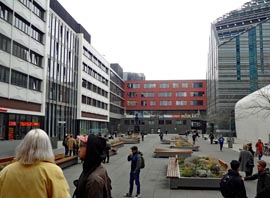
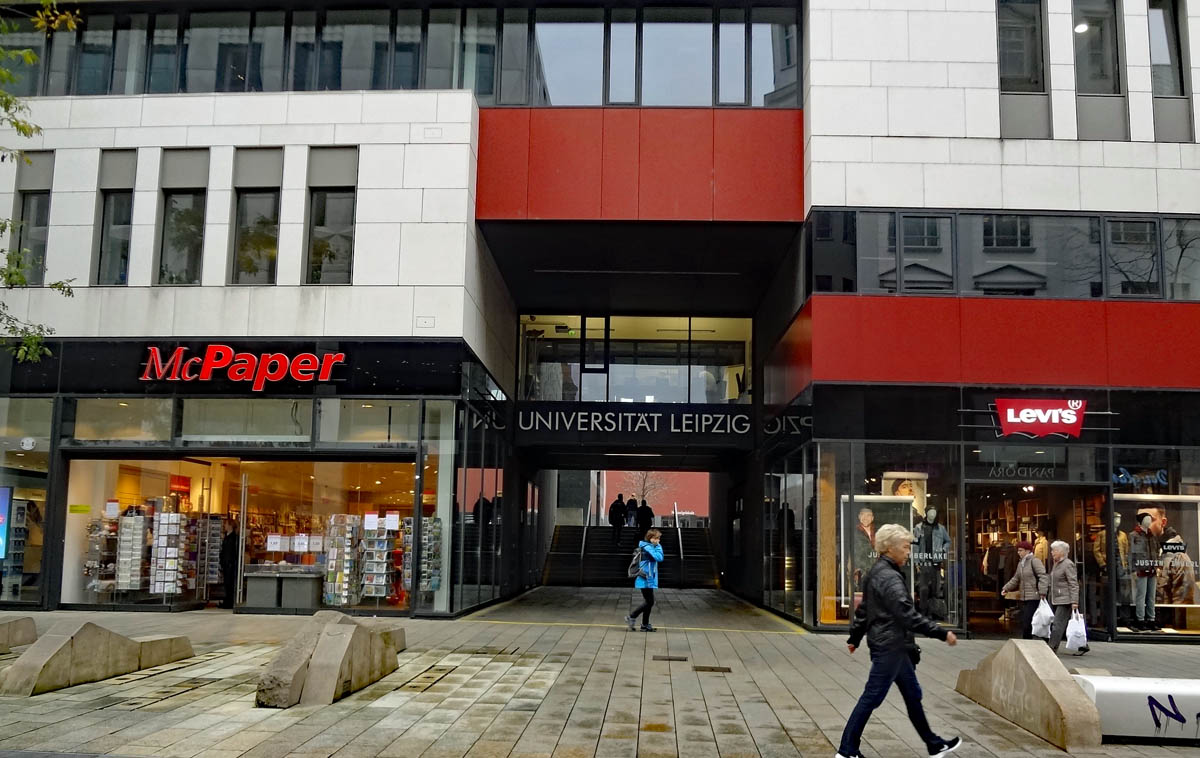
- This entrance tells the campus is in the middle of the city. It consists of buildings around a quadrangle with a statue of Leibniz.
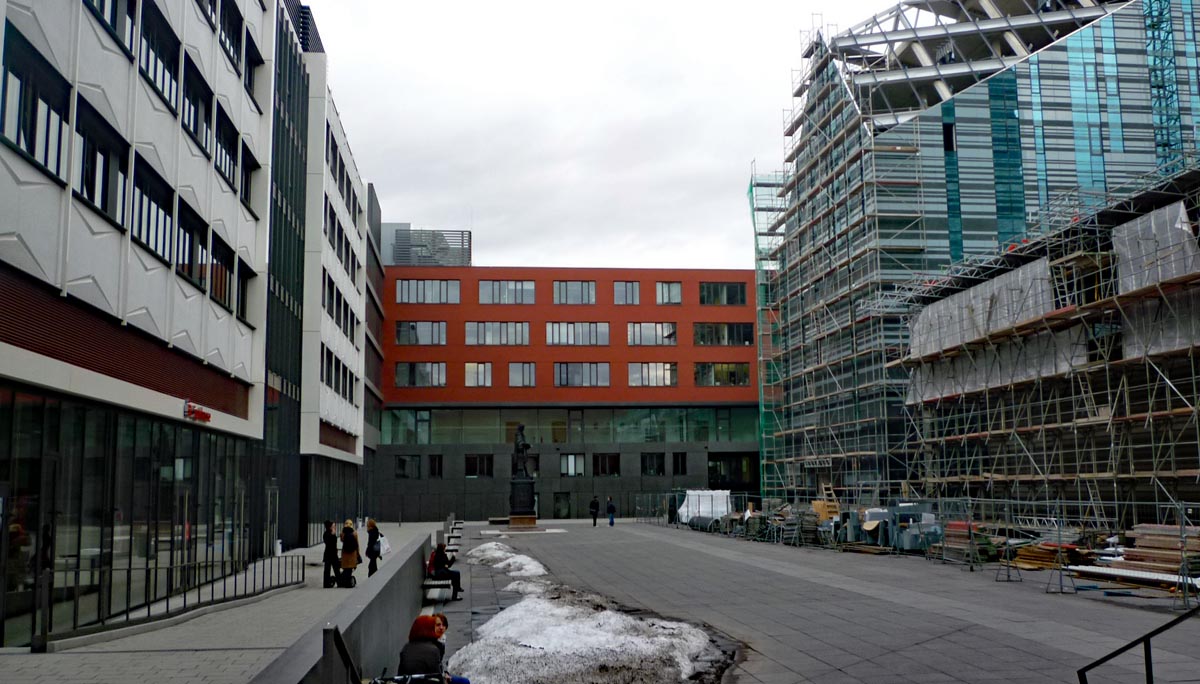
- This original campus consists of a quadrangle surrounded by a number of buildings. The statue of Leibniz is seen in this photo.
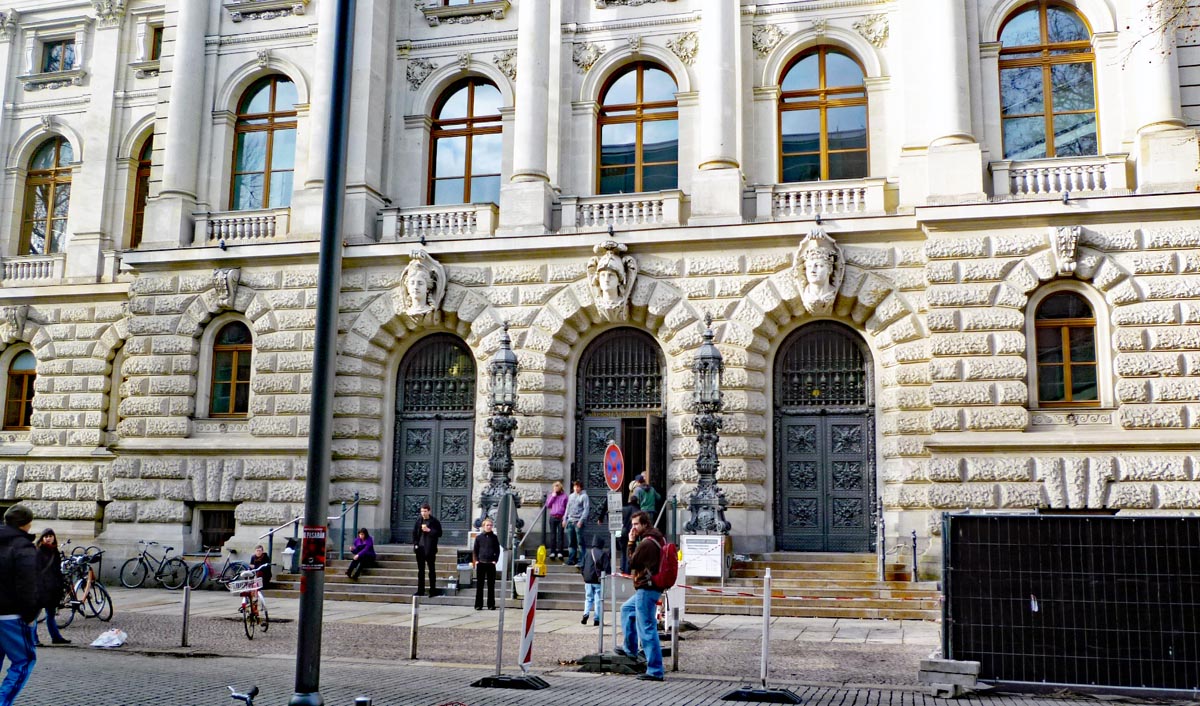
- When Germany was divided, this University was called Karl Marx University. Since
the unification in 1991, the place has been refurbished.
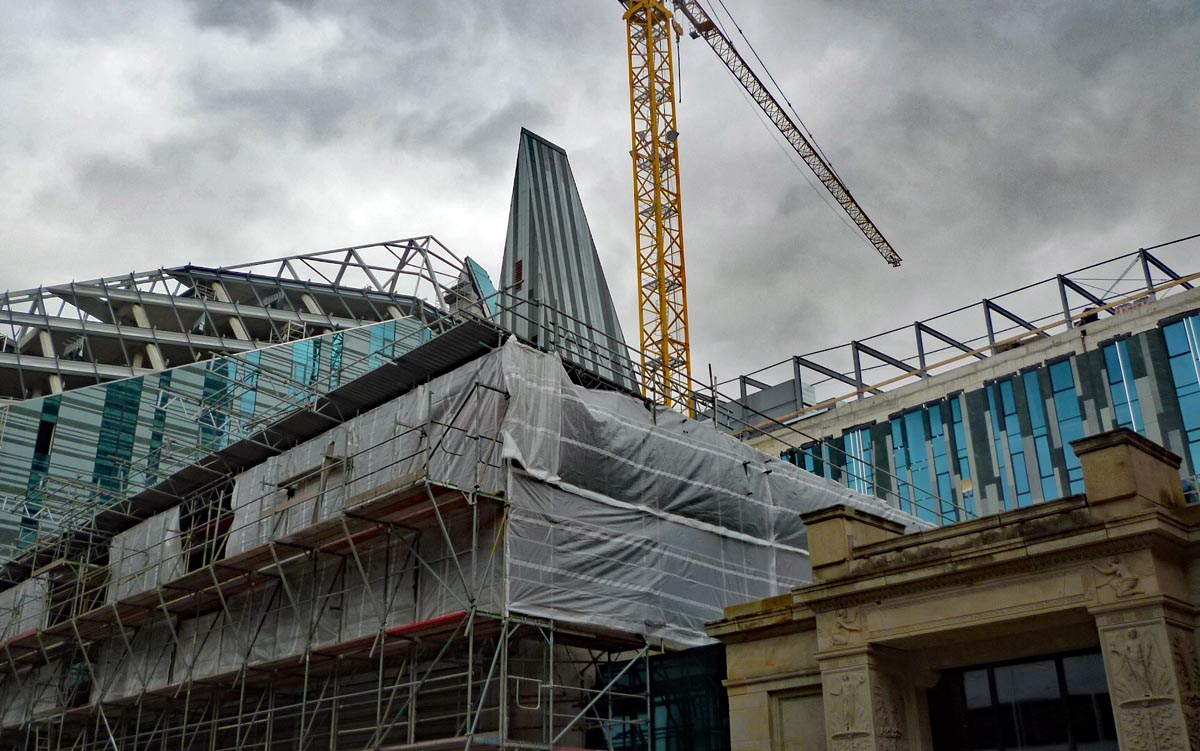
This photo of 2010 tells about the construction process.
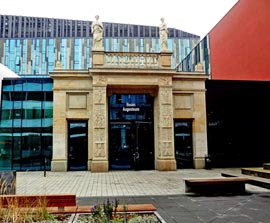
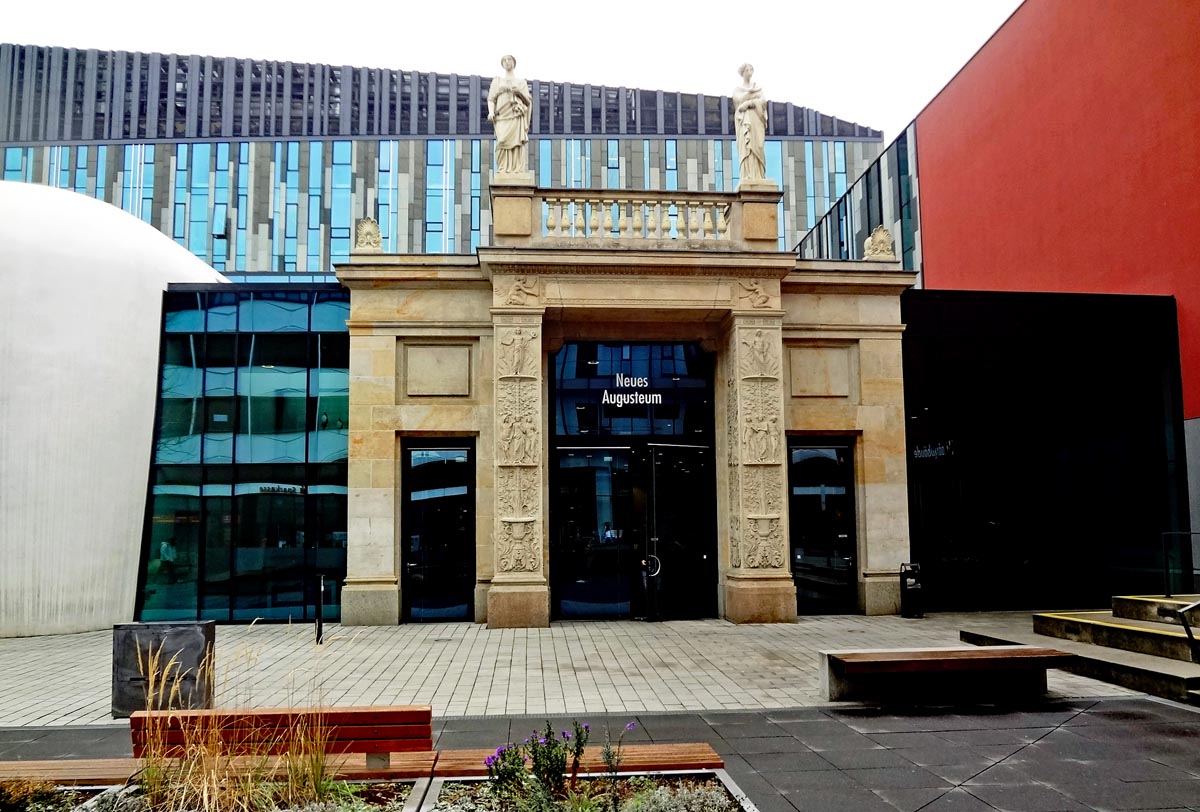
- The main building on this campus is called "Augusteum." Its entrance was like this in 2010, and the construction process was going on. The entrance appears to be the original structure.
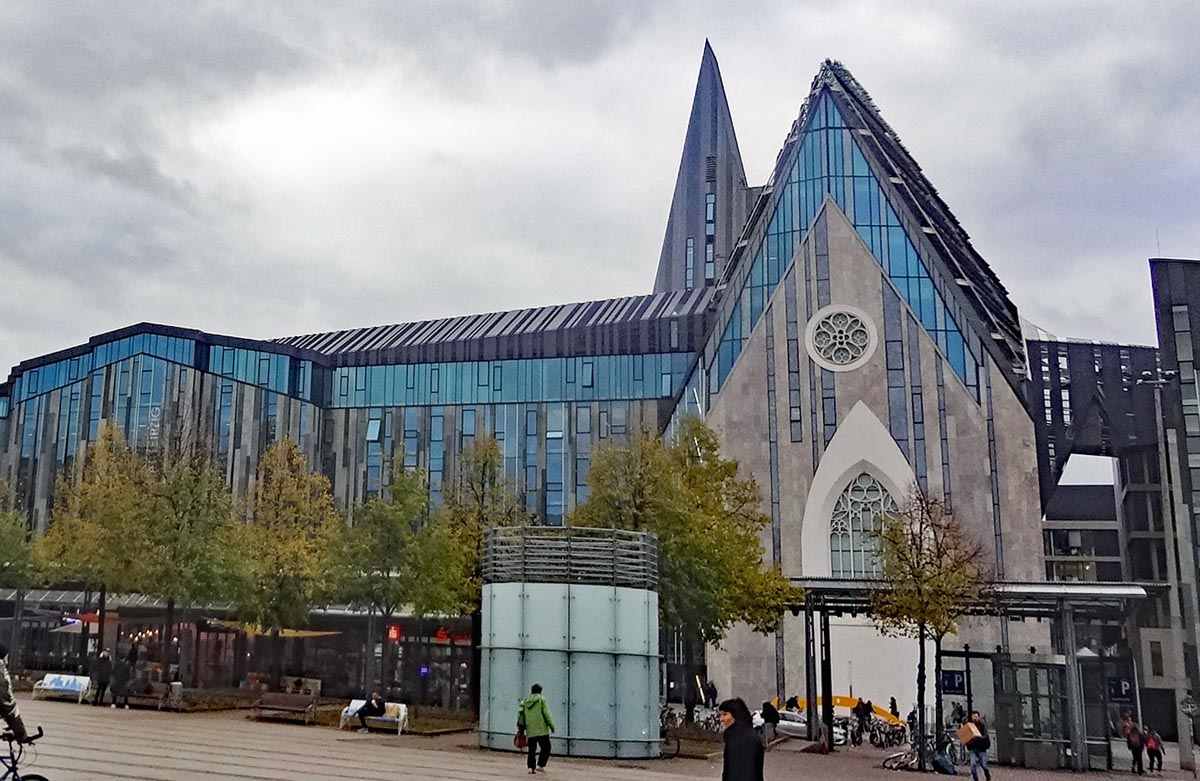
- This photo was taken in 2018. The
building is now called Neues Augusteum.
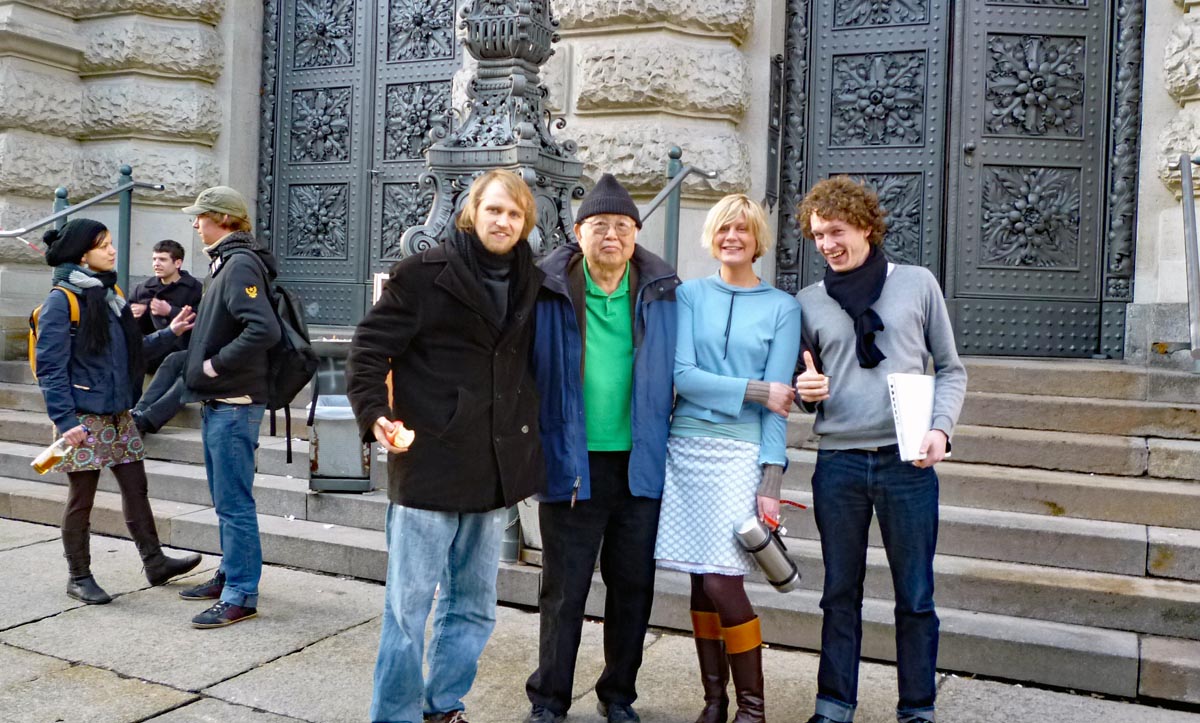
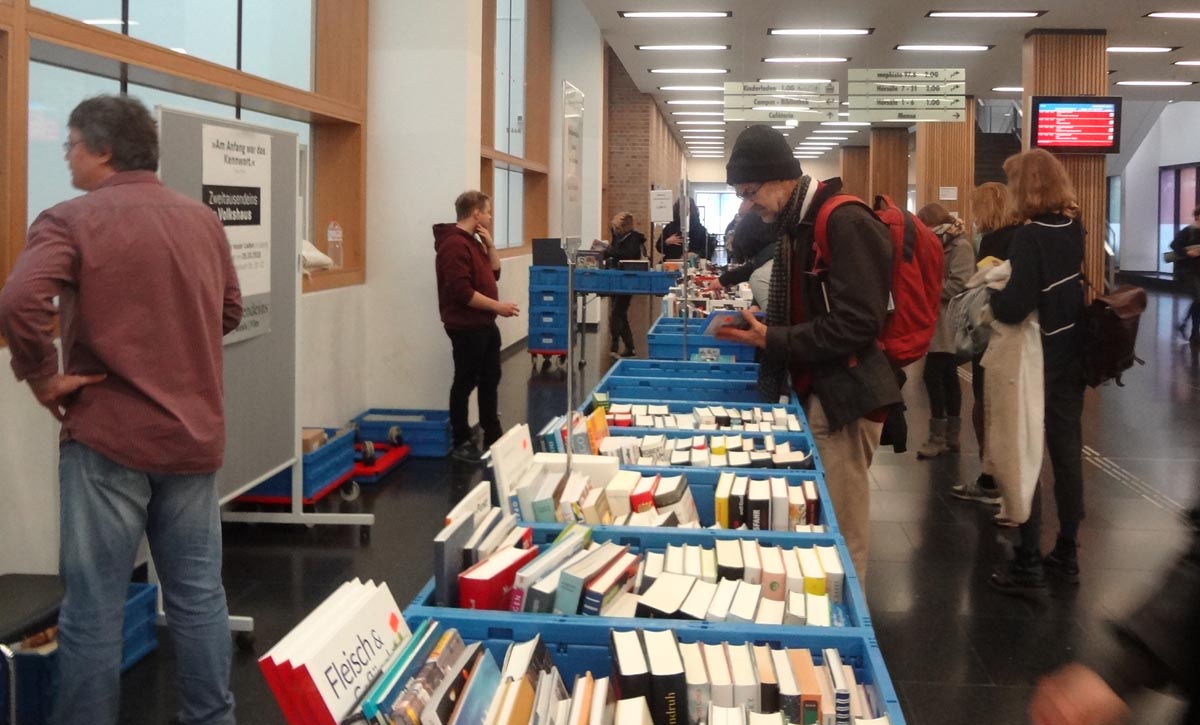
- Students and books. They cannot be separated from any university.
- It is always a pleasure for me to talk with students.
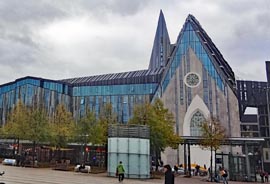
- The new Augusteum seen from the Augustusplatz,
east of the campus.
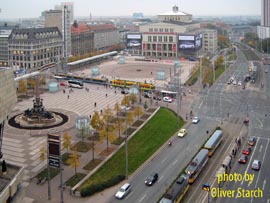
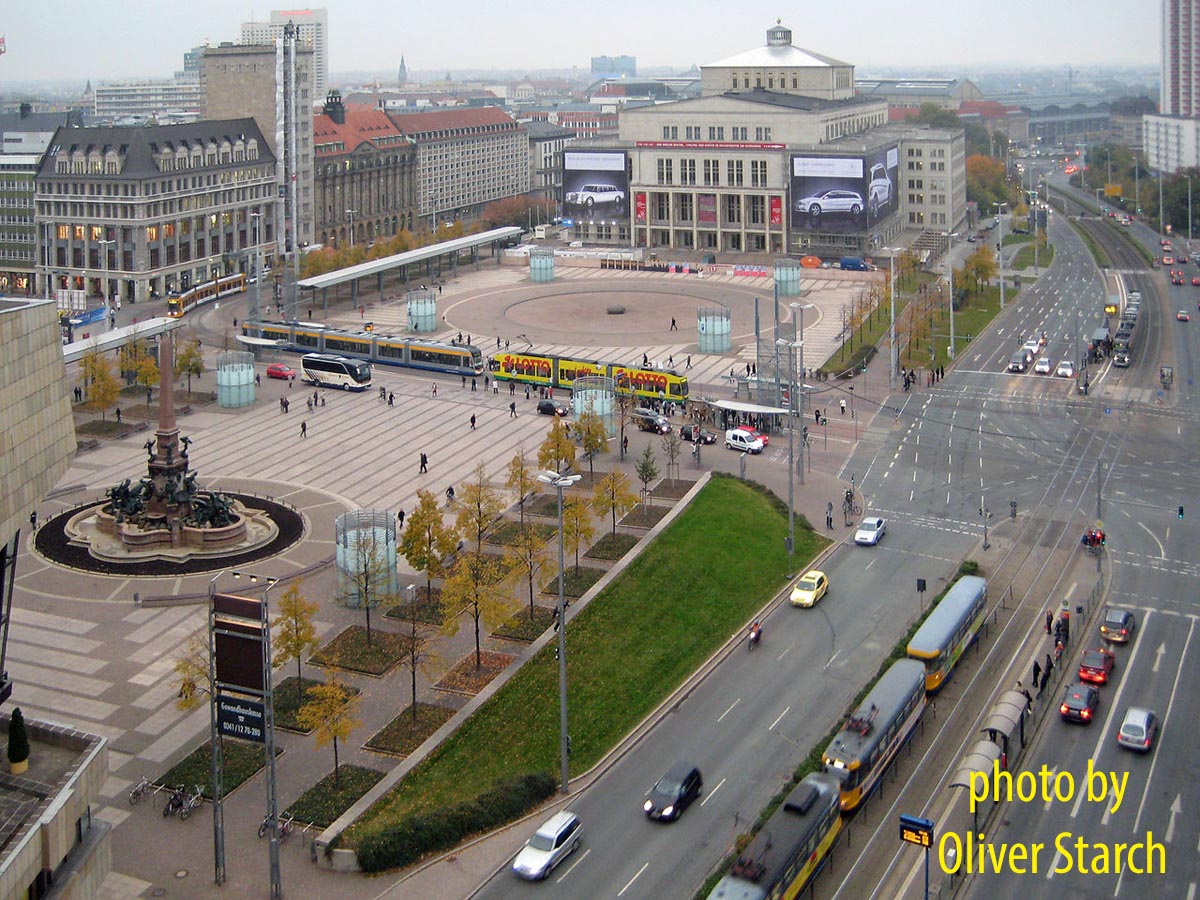
- The Augustplatz is a large open area, also with it history. Here is the
Wikipage with
interesting stories and photos.
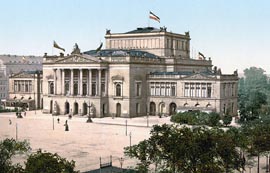
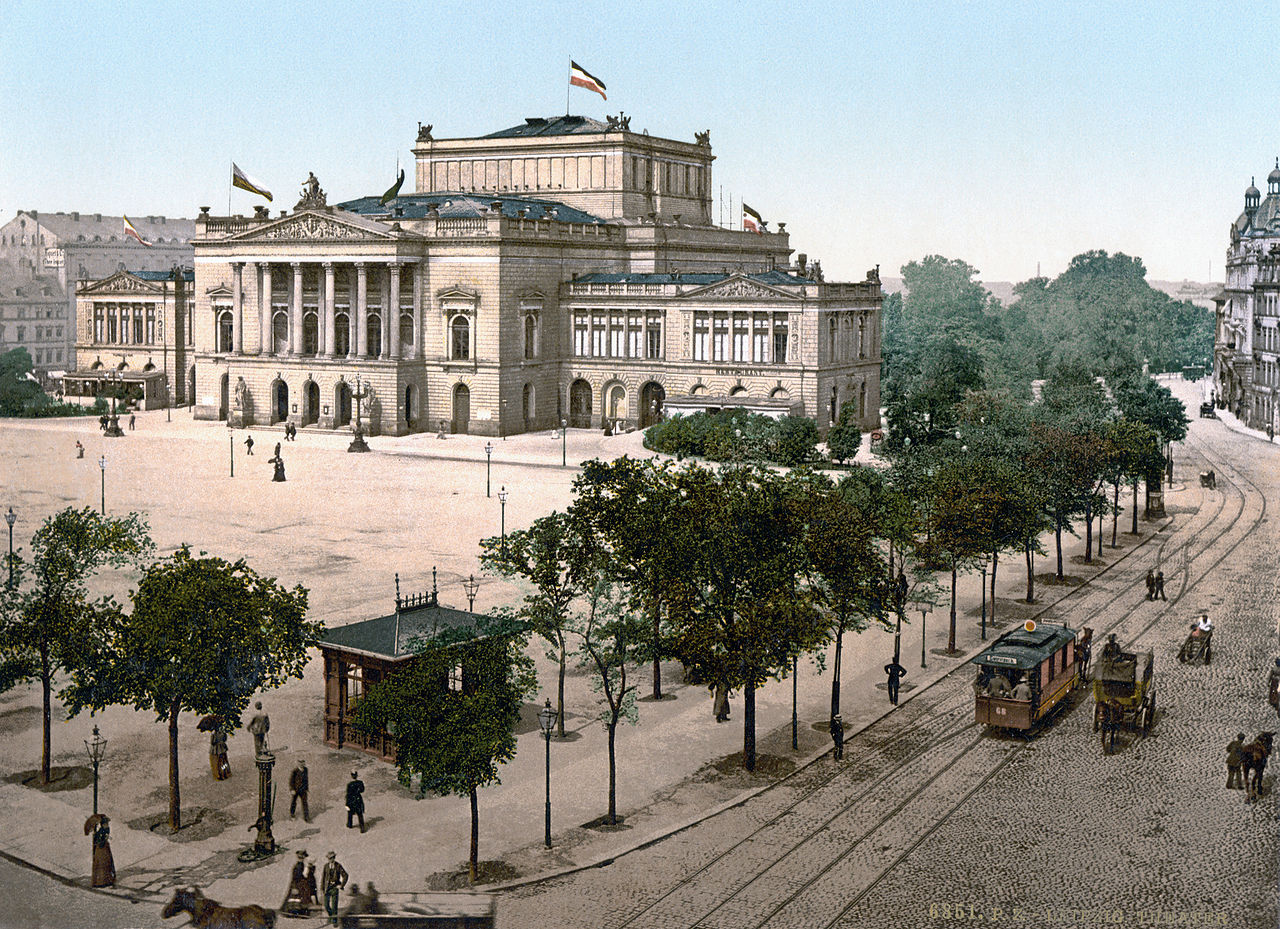
- Leipzig's opera house is the northen edge of the Plaza.
- At the southern edge of the Plaza is a multi-purpose concert hall called Gewandahus.
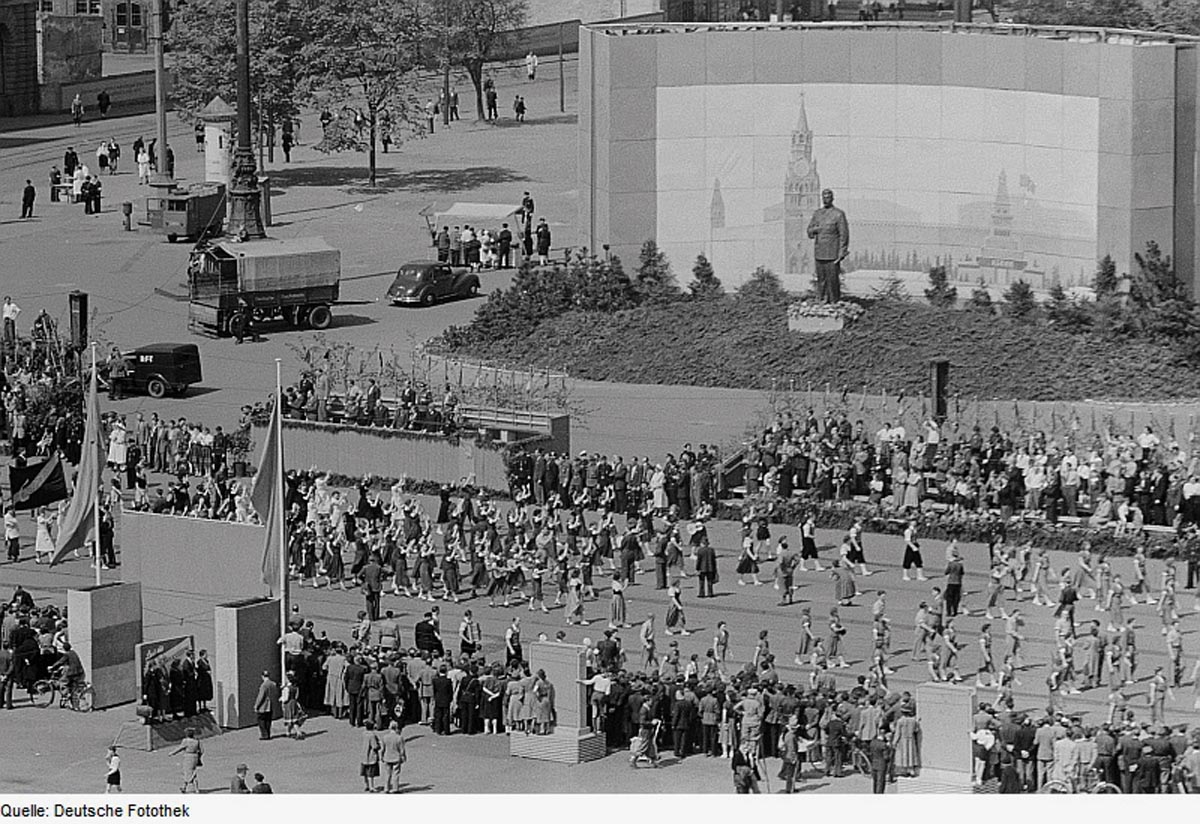
- The most interesting photo is that of the ceremony for erecting
Joseph Stalin's statue in May of 1953.
Stalin died in in March of 1953, and this ceremony took place two months after his
death. Soon after his death, most of his statues were removed even in Russia.
Thus, this statue in Dresden was a joke.
This area of Germany was undeer Soviet control at that time, and the university was called "Karl Marx University." Angela Merkel studied physics at Karl Marx University (1973-8).
- For many other interesting photos of this plaza, go to the with German version of the Wikipedia page.
-
Bibliotheca Albertina serves as the central library for the University
of Leipzig. This library is about one kilometer southwest of the main campus.
This library has it own history since the city of Leipzig once served as
the printing center for Germany. Since I learned about this library during
my high-school years, I made a one-day excursion to this place while I went
to Berlin in 2010. I took a number of photos.
- The libray building is massive.
- This is the entrance to the library.
- As always, it is a pleasure to talk with students.
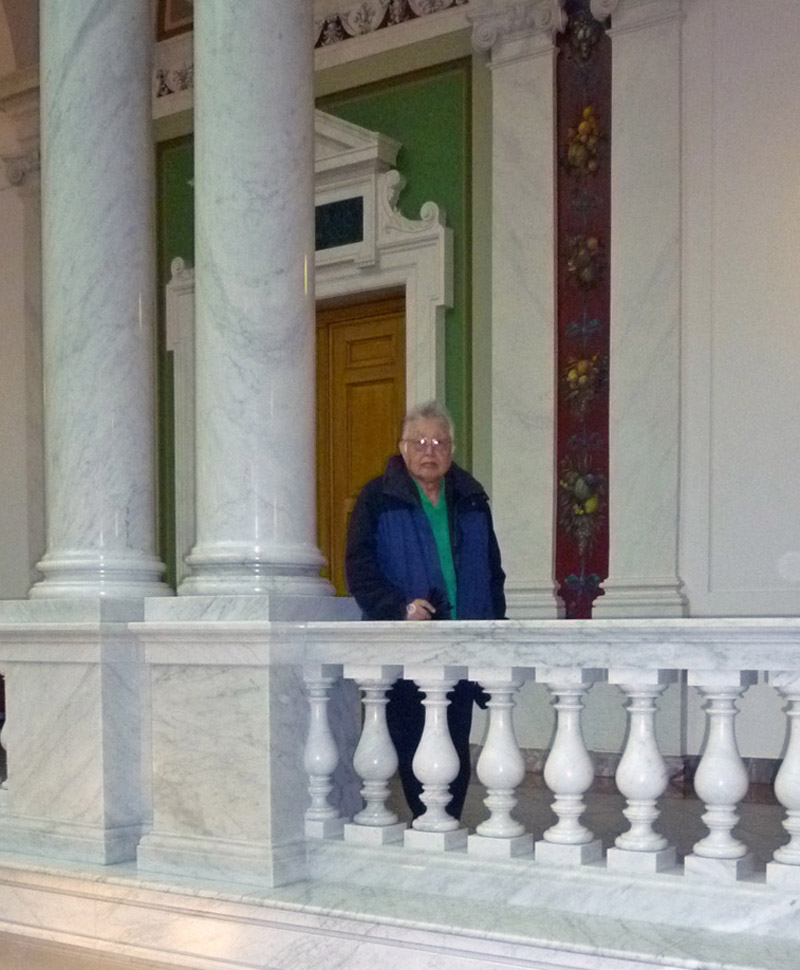
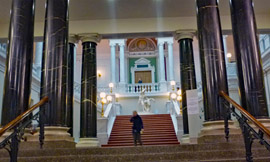
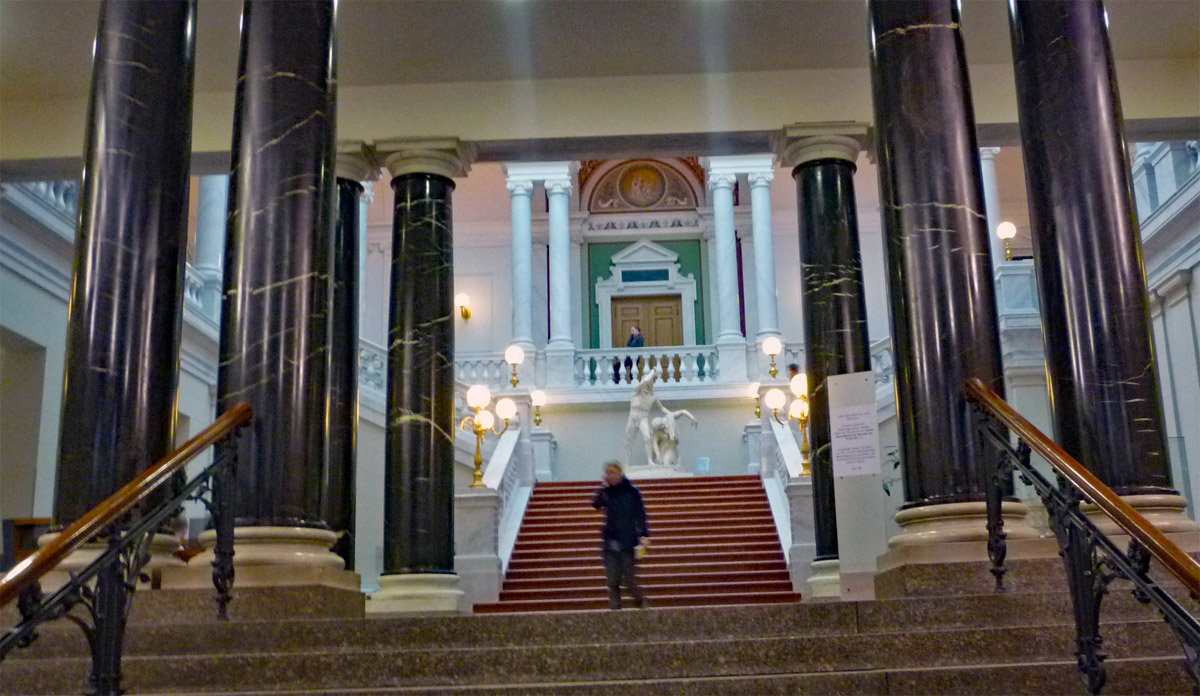
- The entrance lobby looks like this.
- This photo shows that I was inside the library. I had a great admiration for this place since I learned about this library in 1952 during my high-school years.
- Here is one of the reading rooms.
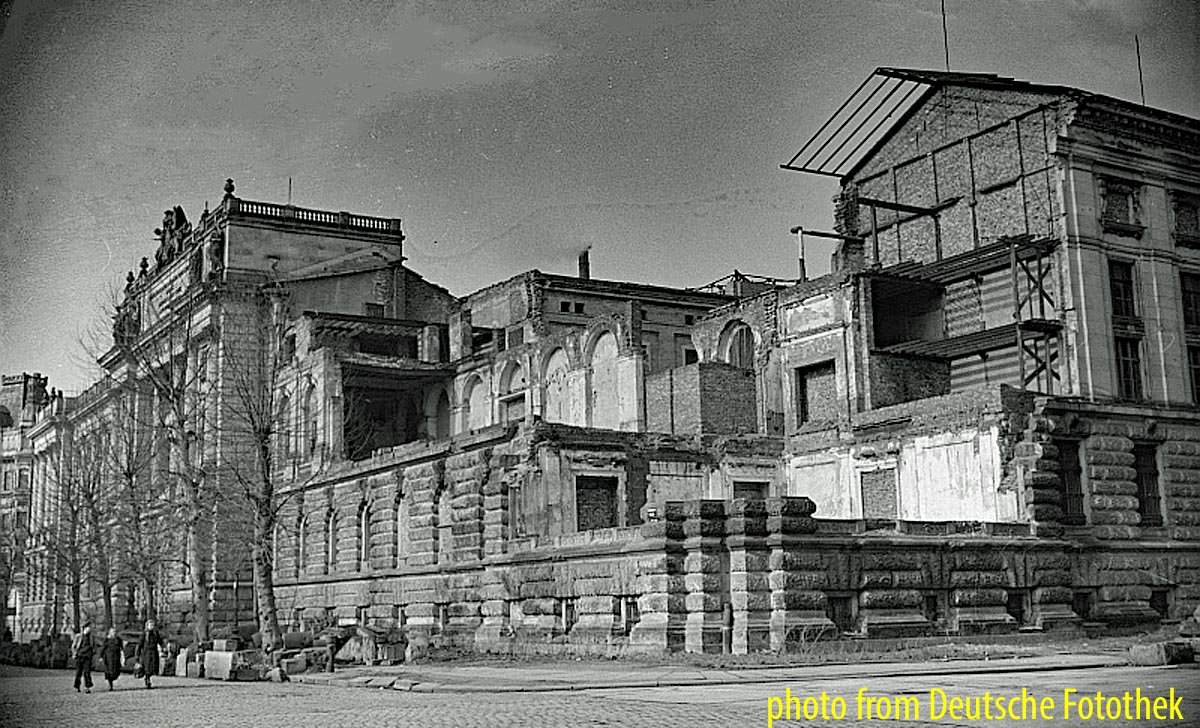
- This libray was heavily damaged during World War II.
- Expanding library. The original library building was massive enough, but it keeps expanding.
-
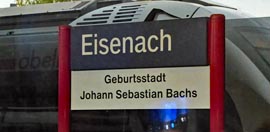
Johann Sebastian Bach is the most famous person from Leipzig even though
he was not born there, He was born in Eisenach.
The city of Eisenach is very proud of him.
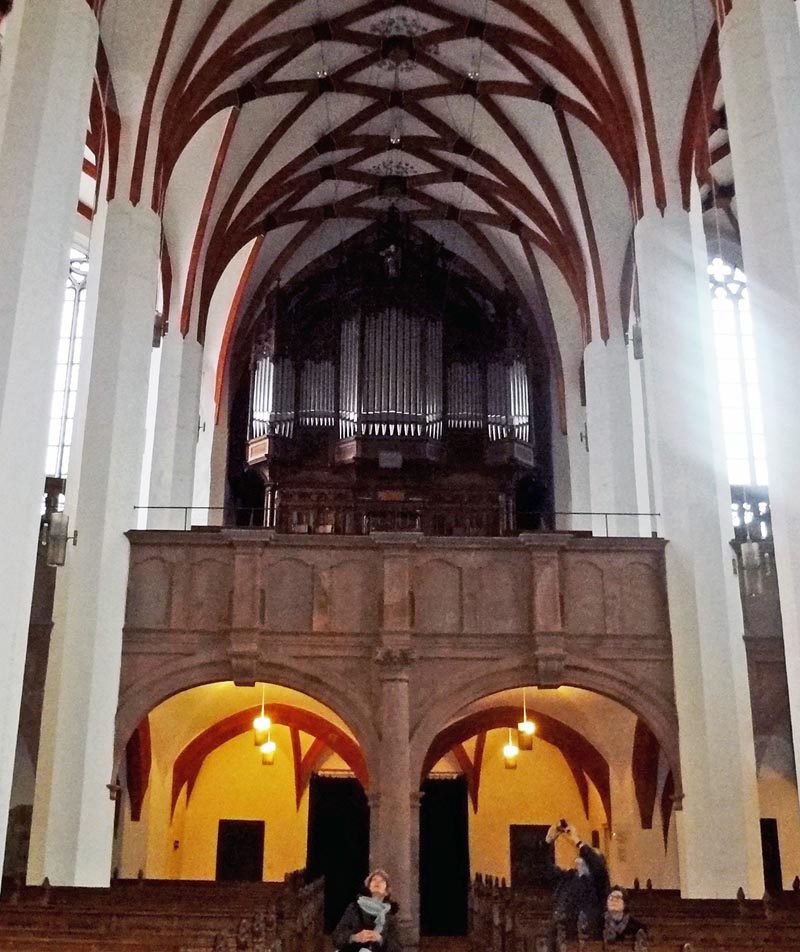
- Bach worked as an organist at the Church of St. Thomas in Leipzig. While working there, he started composing his own music. You all know where Bach stands in the history of music.
- Bach's grave is inside this Church.
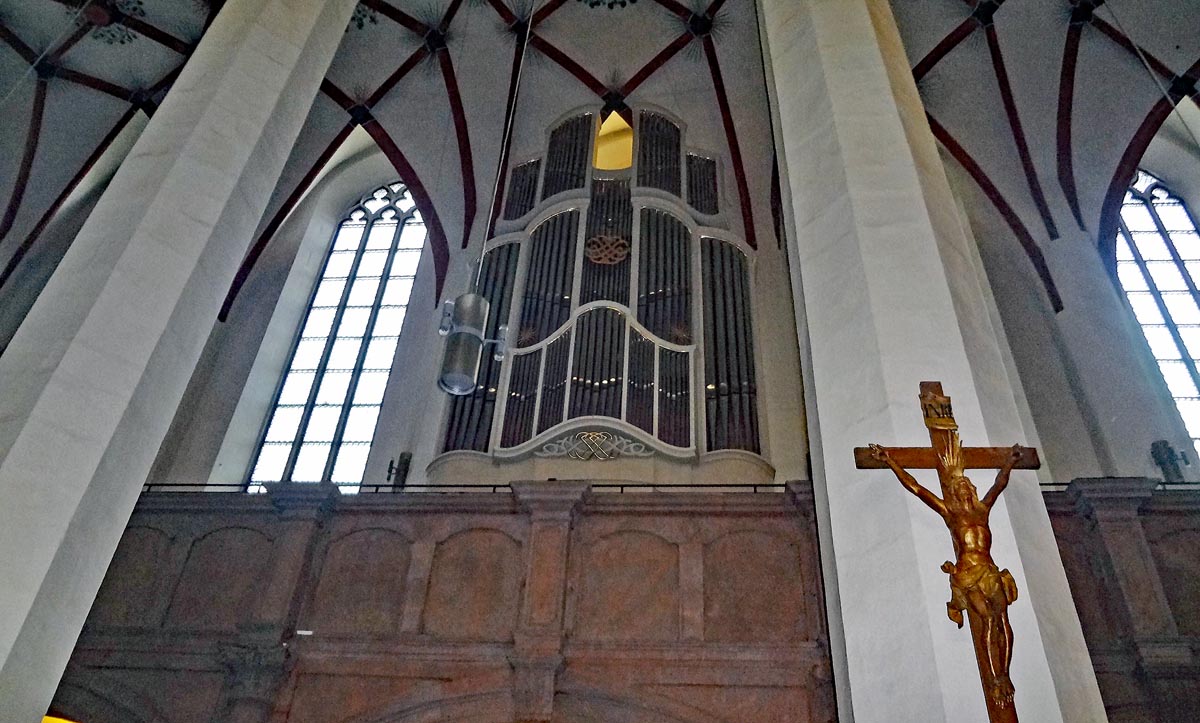
- So is the organ Bach used to play,
even though the Church uses a
modern-day high-tech organ these days.
- Bach did not go to the Univ. of Leipzig, but he became prominent enough to send his sons and pupils to the University.
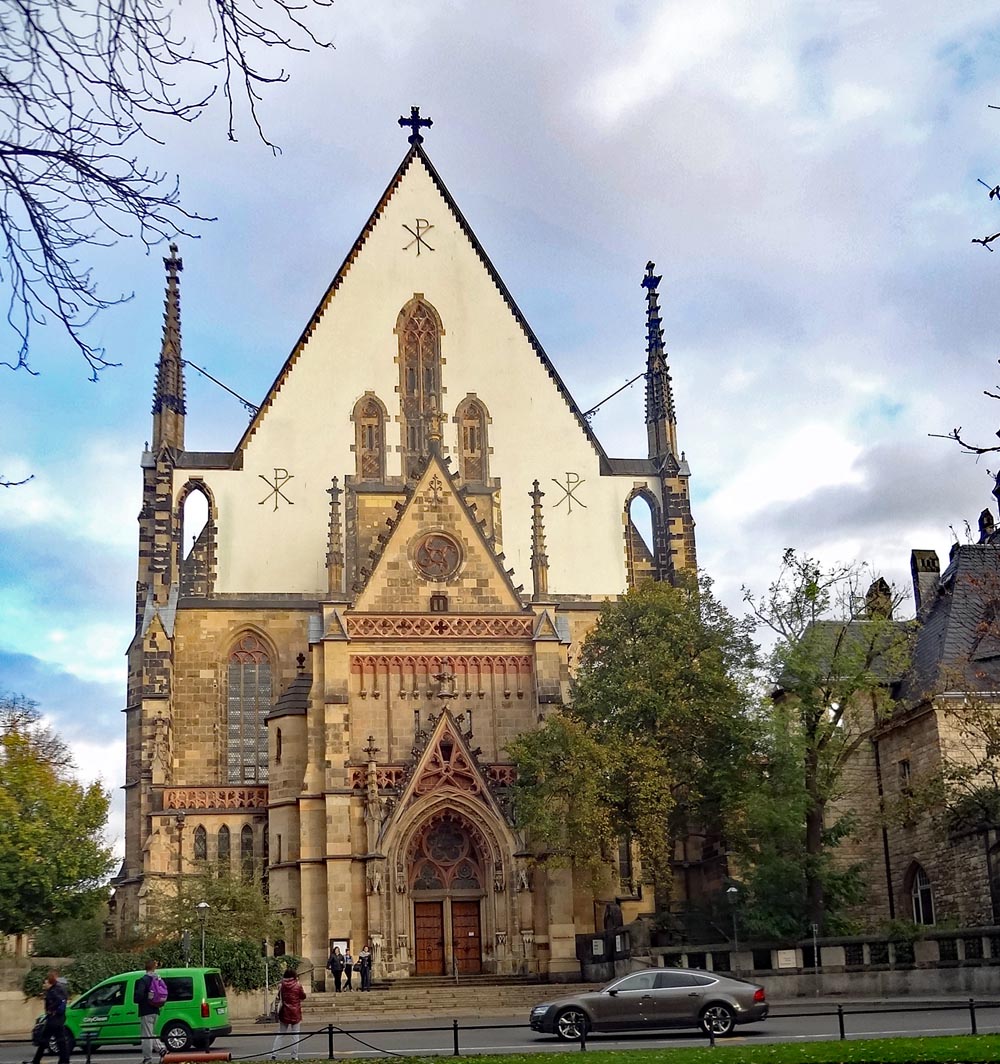
- This is the entrance to the Church of St. Thomas.
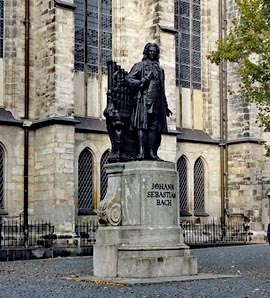
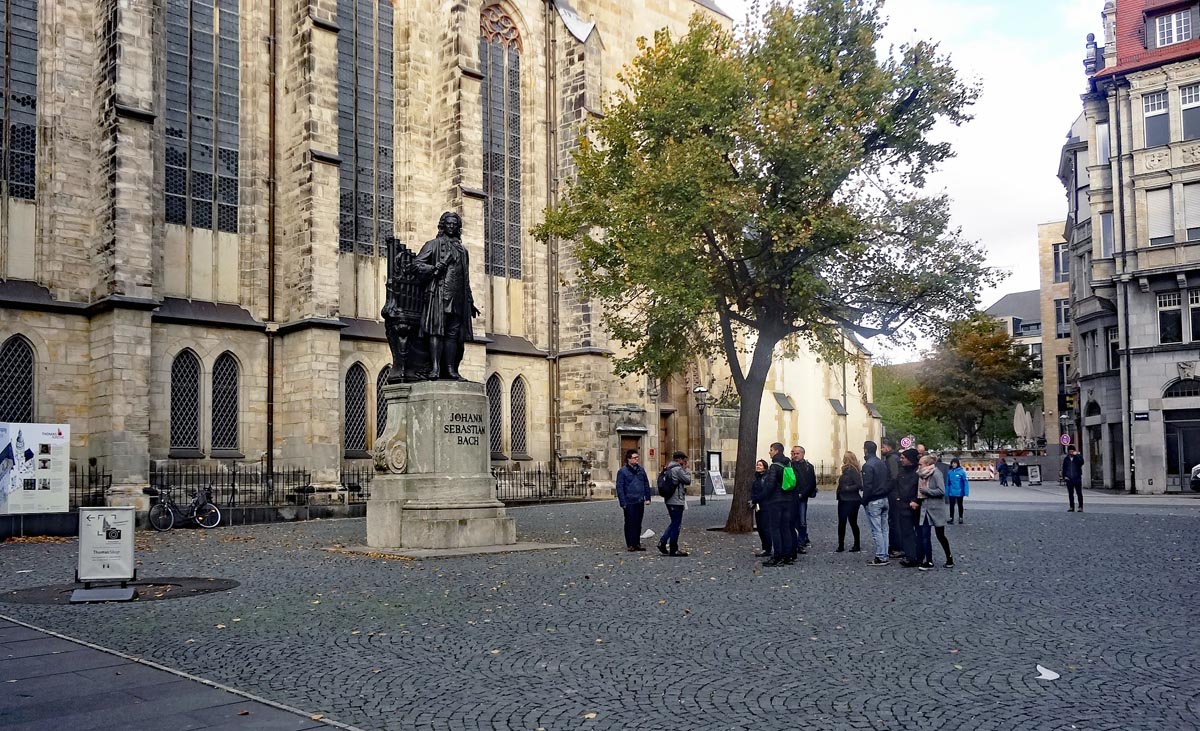
- Bach's statue is standing in front of the sidewall of this Church. It was a great honor for me to have a photo with Bach.
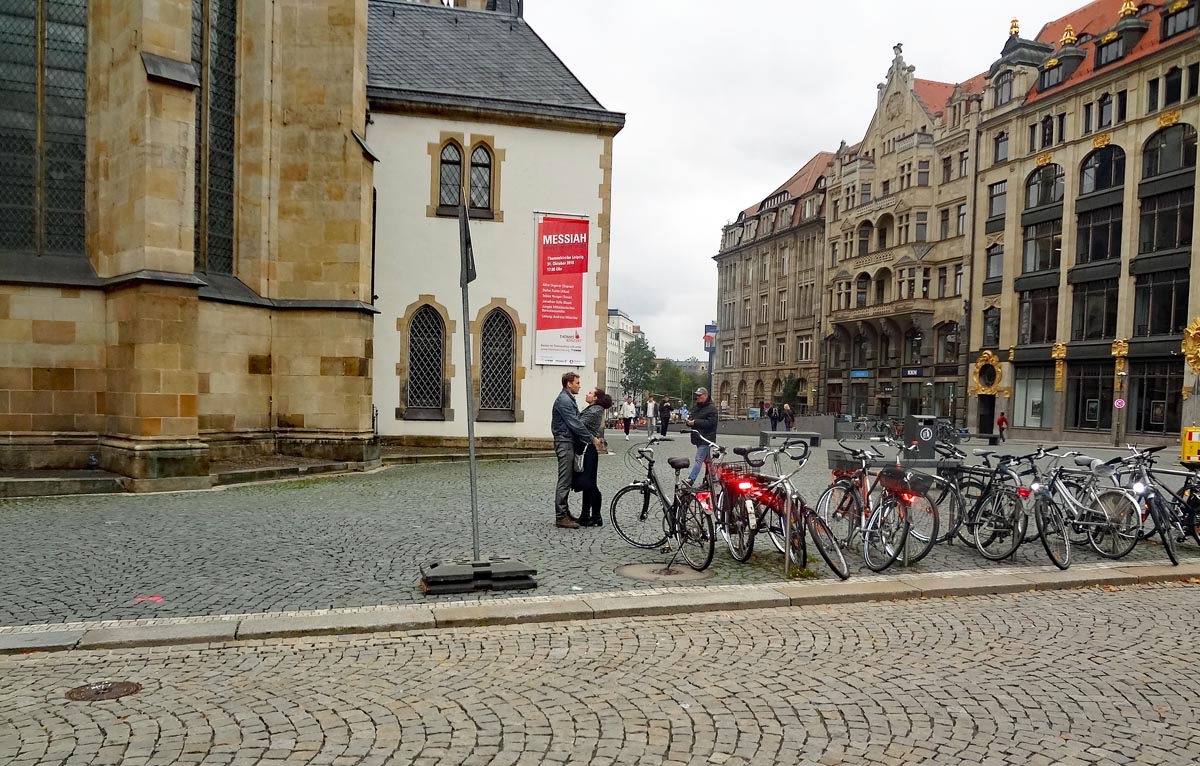
- The back of the Church seen from the the town square.
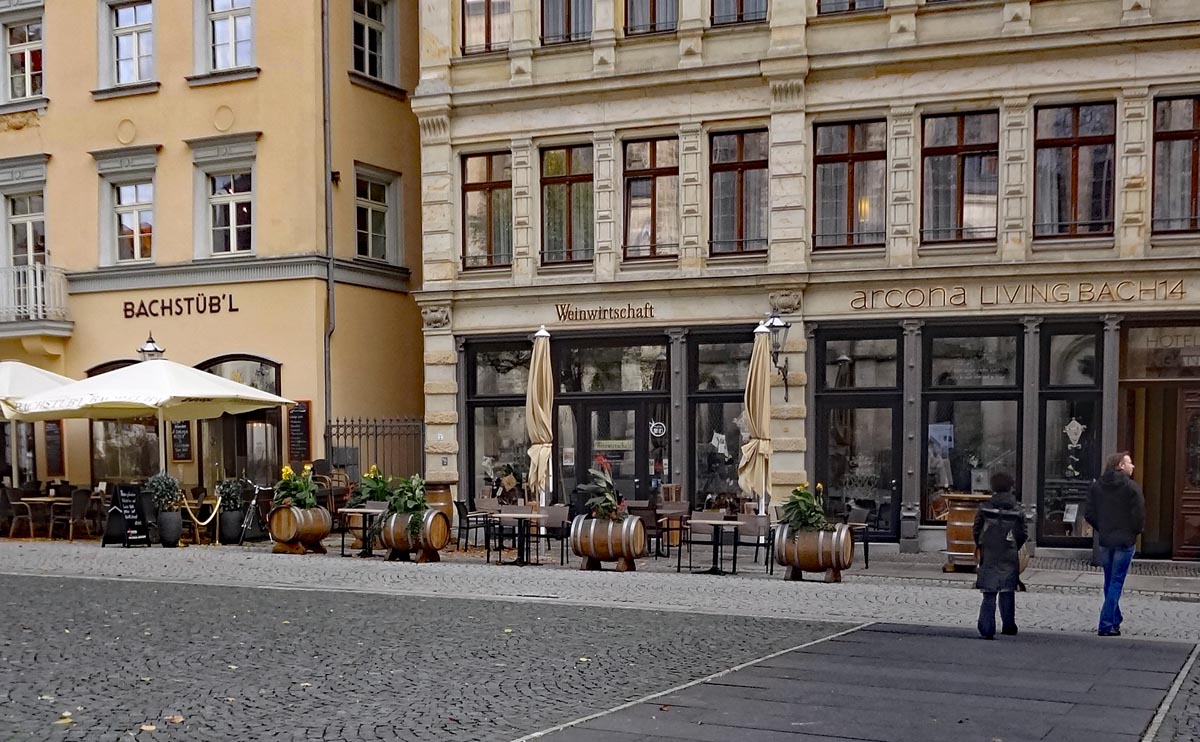
- The life as usual near the Church. Germans love wine barrels.
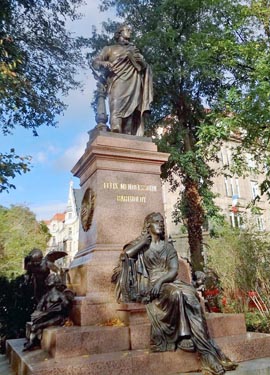
- Felix Mendelssohn
is another prominent person from Leipzig. He was born
in Hamburg in 1909, with a Jewish background. He later became baptized to
become a Christian. He spent twelve years in Leipzig and died there 1847.
While there, he was able to meet Goethe and many other creative Germans.
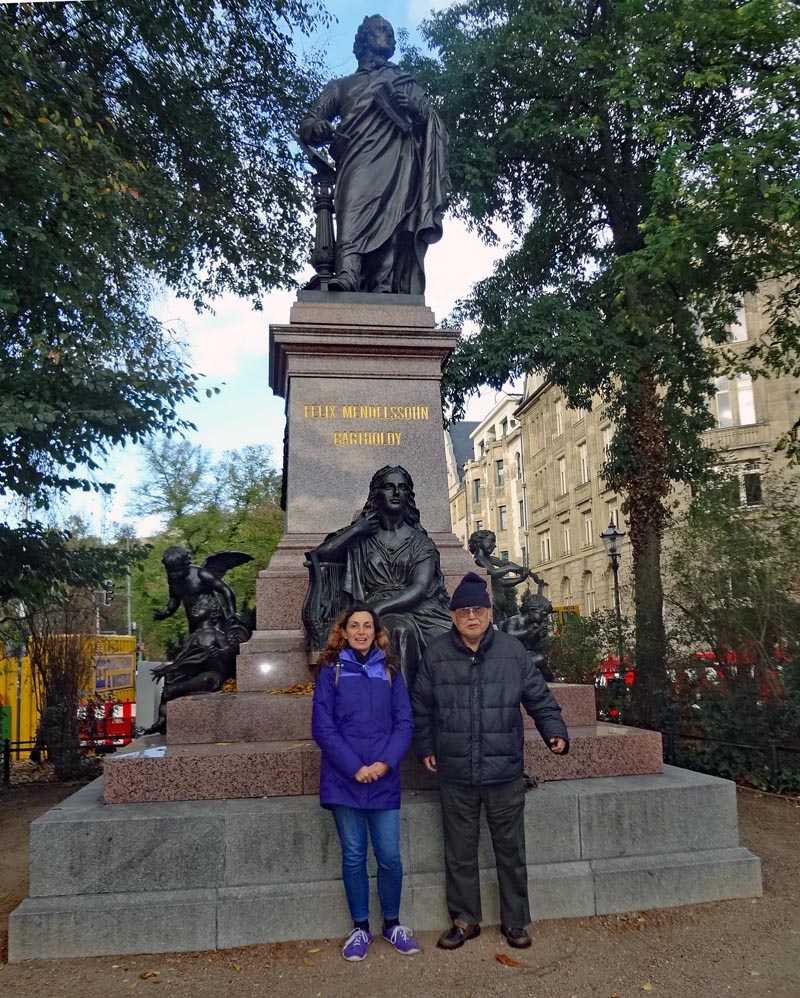
- His statue is prominently standing in front of Bach's church
(Church of St. Thomas). I had
my photo
at this statue in 2018. With me in this photo is a young
professor at the Univ. of Leipzig. She studied physics at the
Imperial College London.
Click here for a more
professional quality photo of this statue from the Wikipedia.
This statue was once removed during the Nazi period because of Mendelssohn's Jewish background, and was reconstructed in 2008.
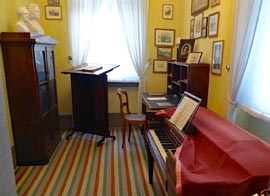
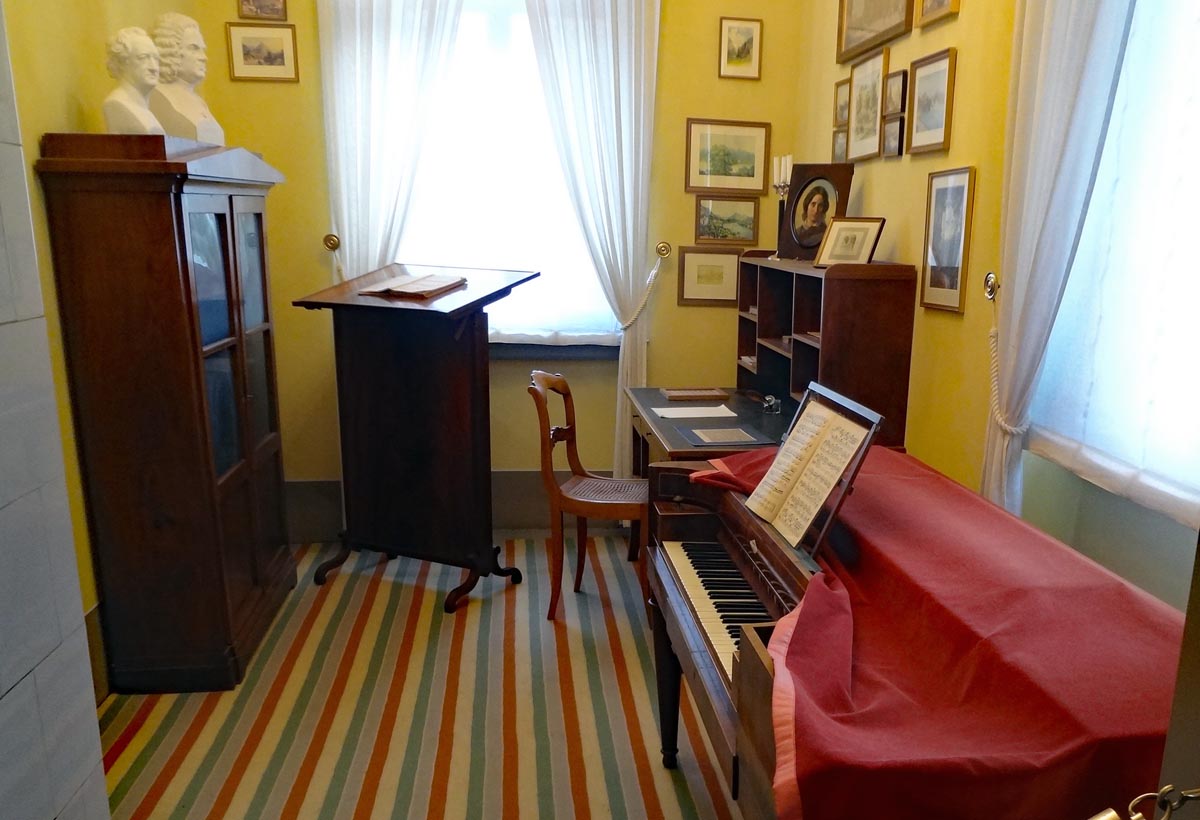
- The Mendelssohn is at a short distance from the original campus of the Univ. of Leipzig. Mendelssohn lived in this building with his five during the final years of his life. This building now contains a museum showing Mendelssohn's belongings.
- This is a photo of his study which I took during my visit to the museum.
- Mendelssohn was quite fond of travelling around the world. He liked Scotland an Italy. His symphonies No. 3 and No. 4 are entitled Scottish and Italian Symphonies.
- He was also an artist. He painted many picture. Here is his picture of Rome painted by him.
- His statue is prominently standing in front of Bach's church
(Church of St. Thomas). I had
my photo
at this statue in 2018. With me in this photo is a young
professor at the Univ. of Leipzig. She studied physics at the
Imperial College London.
Click here for a more
professional quality photo of this statue from the Wikipedia.
- The Leipzig served as Germany's brain city for many years. There are
many other interesting places.
- The city started from its market square, the original city hall building
at this
market square.
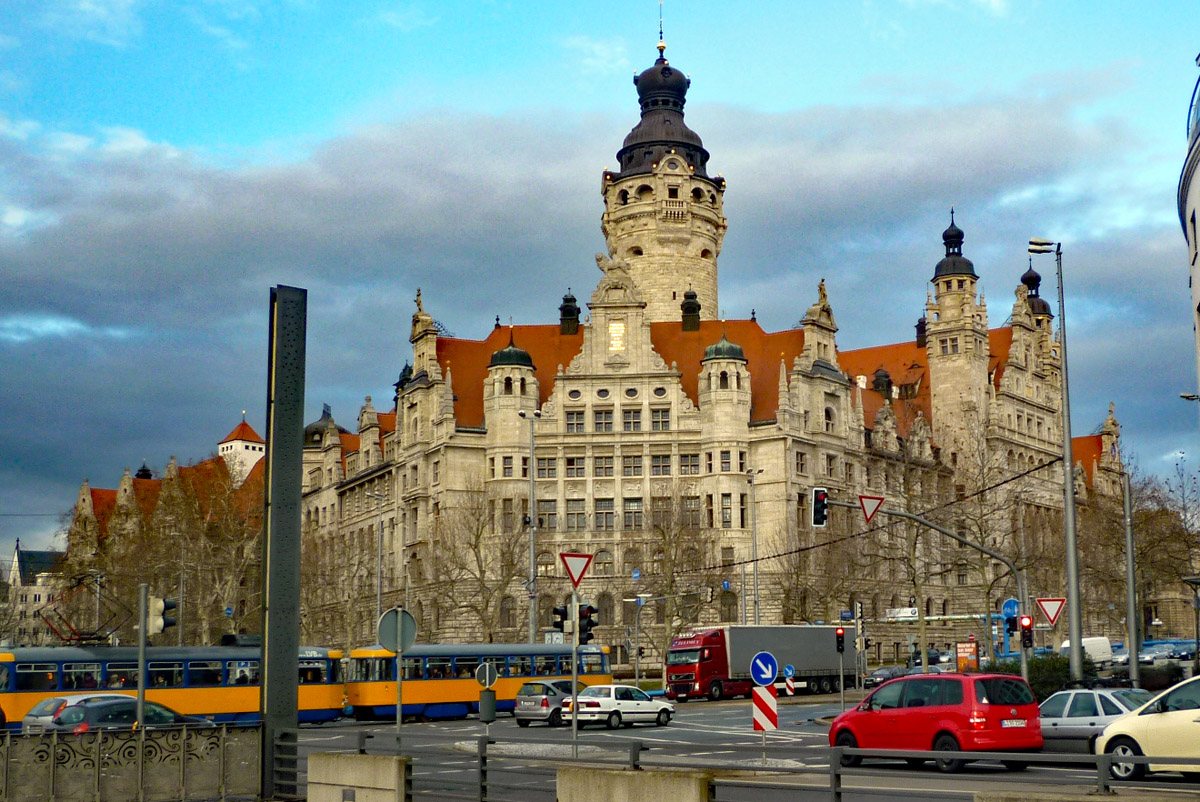
- The new city hall was built in 1905 to mark the beginning of the 20th Century. This building looks like this
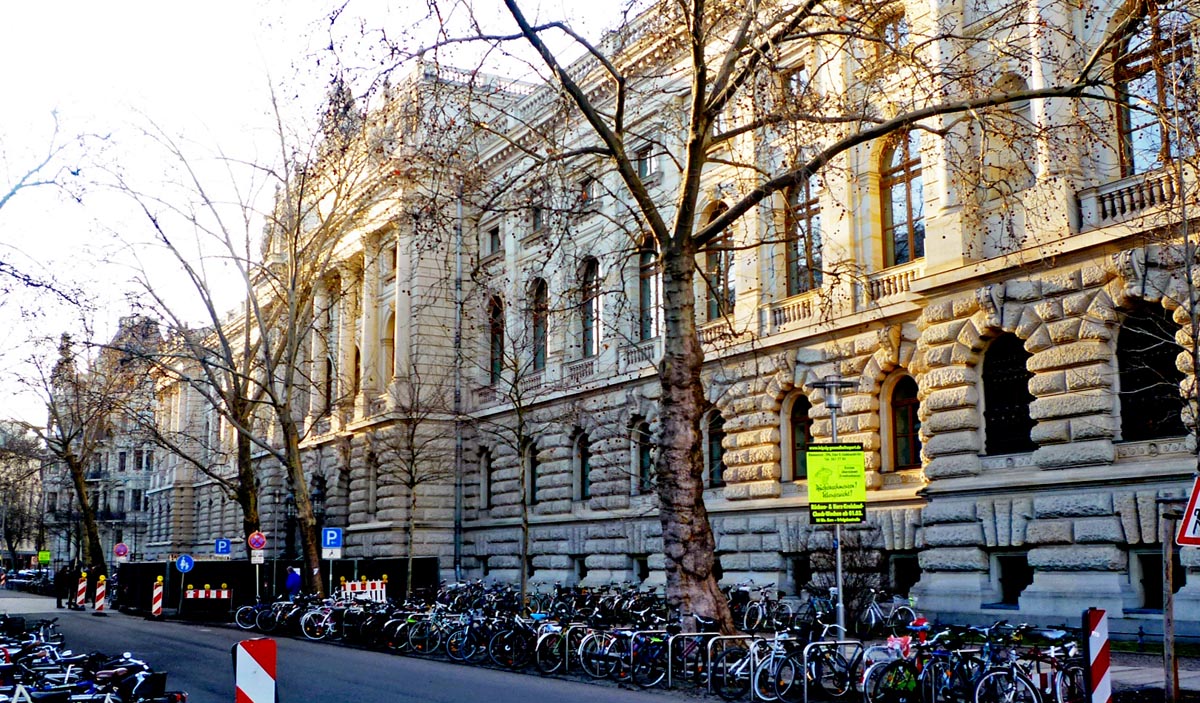
- This federal building serves as the courthouse. Here is a professional-quality photo of the same building from Wikipedia.
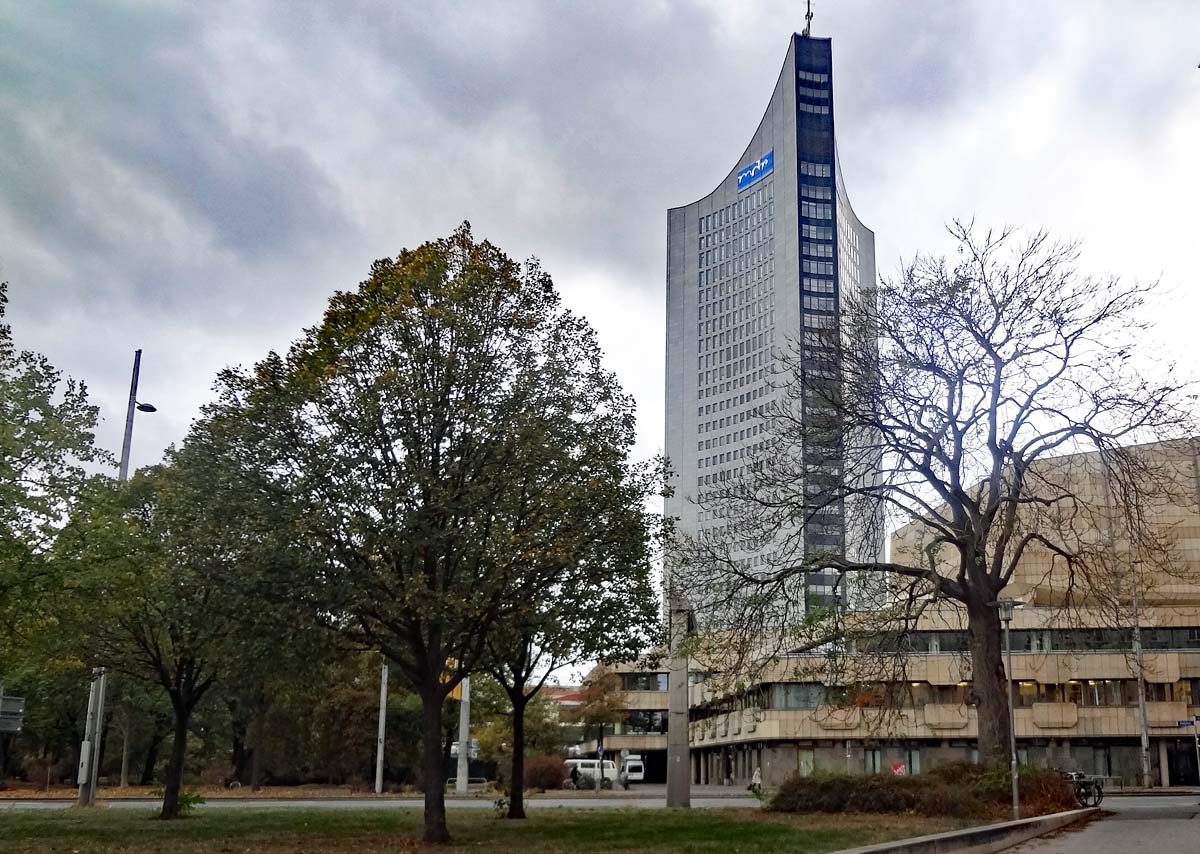
- Leipzig's Hochhaus is a tall building. It is located at the southern end of the University's main campus. This building houses the companies managing Germany's energy system.
- The railway station is a massive building telling that Leipzig was once one of the transportation centers in Germany.
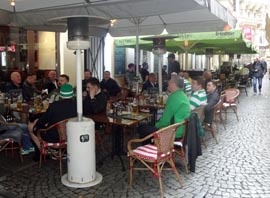
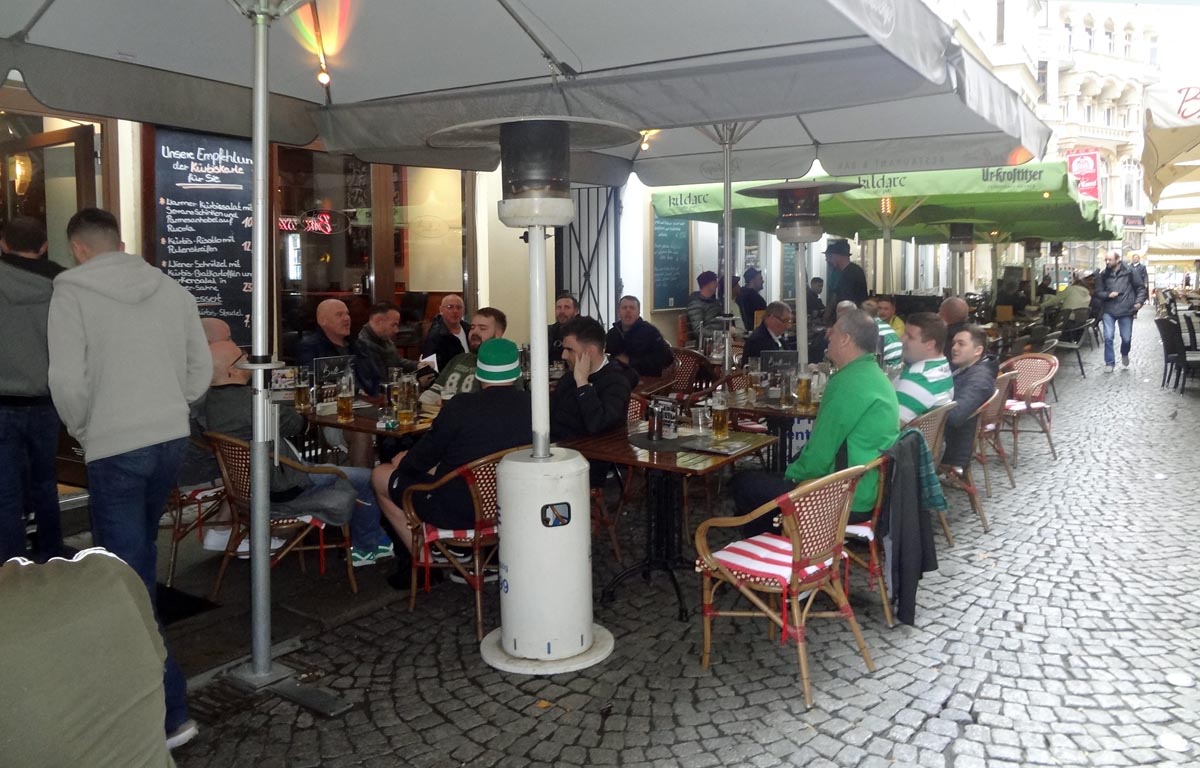
- Beer-drinking places all other German cities. They drink and they sing.
- There are many other interesting photos. I will post them when I have time. Please come again. There are also many interesting photos from the wikipedia page.
- The new city hall was built in 1905 to mark the beginning of the 20th Century. This building looks like this

- The city started from its market square, the original city hall building
at this
market square.
- copyright@2019 by Y. S. Kim, unless otherwise specified.
- Click here for my home page.
- Einstein page.

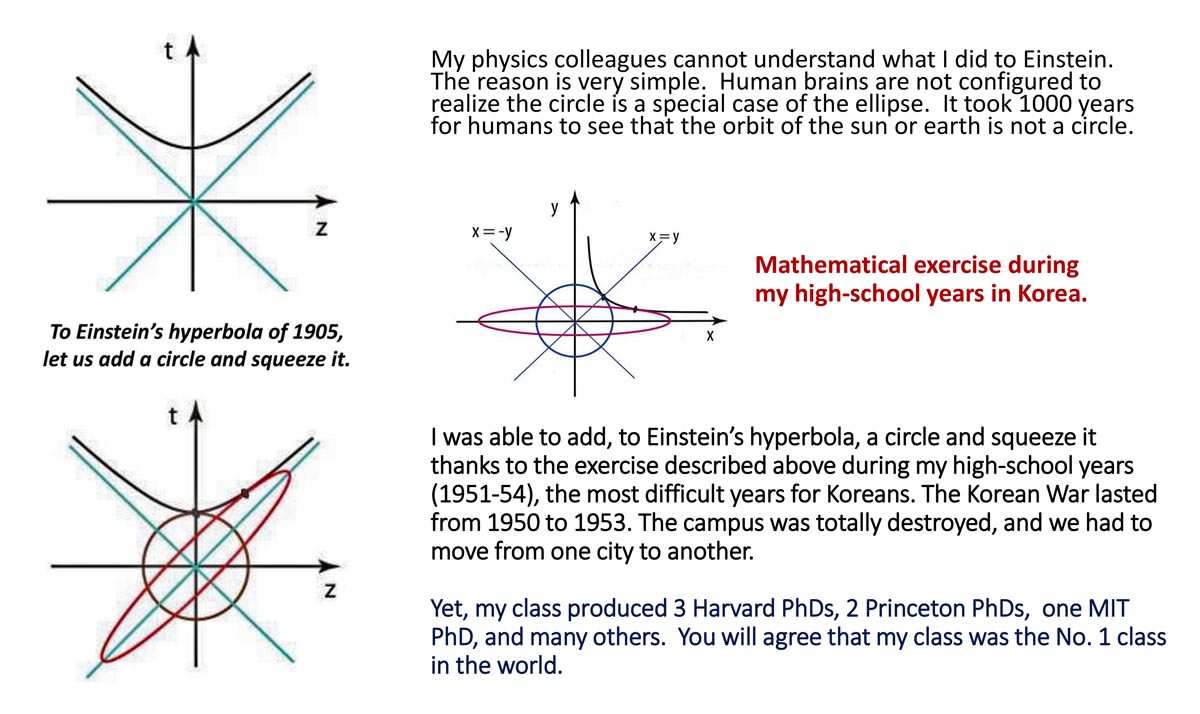
I did this mathematical exercise in 1953 during my high school years.
Click here for a story.
|



#/media/File:Leipzig_Augustusplatz.jpg)
#/media/File:Neues_Gewandhaus_Leipzig_2011_Alupus.jpg)