Hong Kong
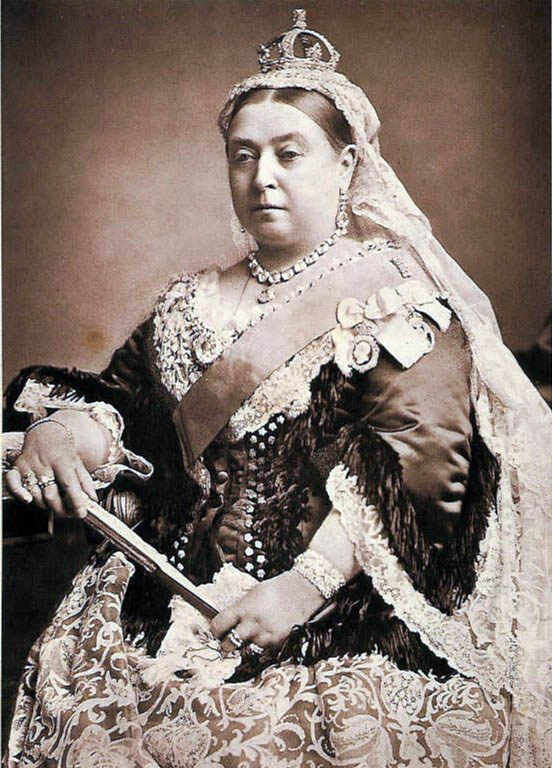
Hong Kong became a territory of China during the reign of Emperor Chin (247-221), remained as a remote region of China until the 19th Century when Western powers became interested in China. This area became a colony of Queen Victoria's British Empire after the first Opium War (1939-42).
What was the Opium War?
-
There are many rich people now in China. It was so during the 19th
Century. The best way to get their money is to sell things they like
best. The early British tradesmen knew opium could be the best way
to get their money. What would you do with that money? Build army
and navy to invade China. This is precisely what the British industrialists
did.
- Many years before Hong Kong, Guangzhou's
Shamian Island was the trading post
for Westerners. It is very easy to reach this Island through the
deep-water river called "Pearl River" from the South China Sea.
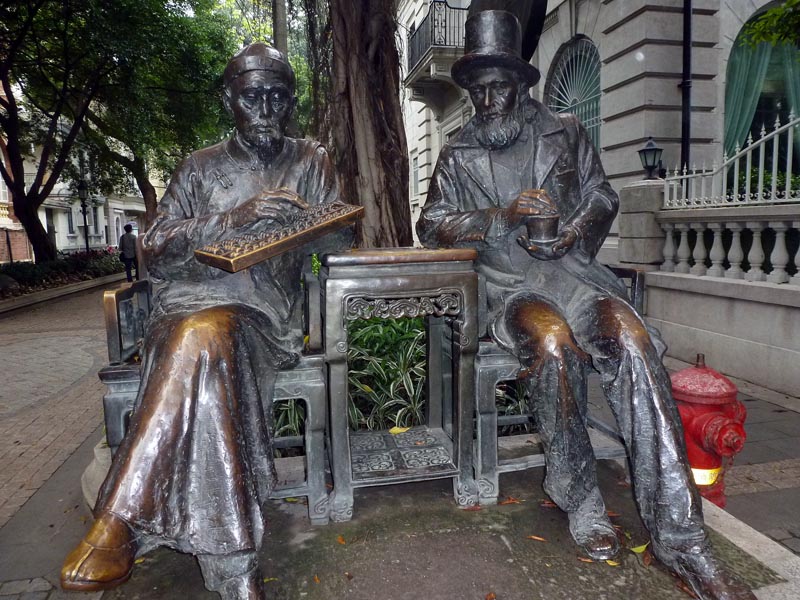
- This a statue of a Chinese businessman with his lap-top computer. He is negotiating with his British counterpart holding a bottle of opium.
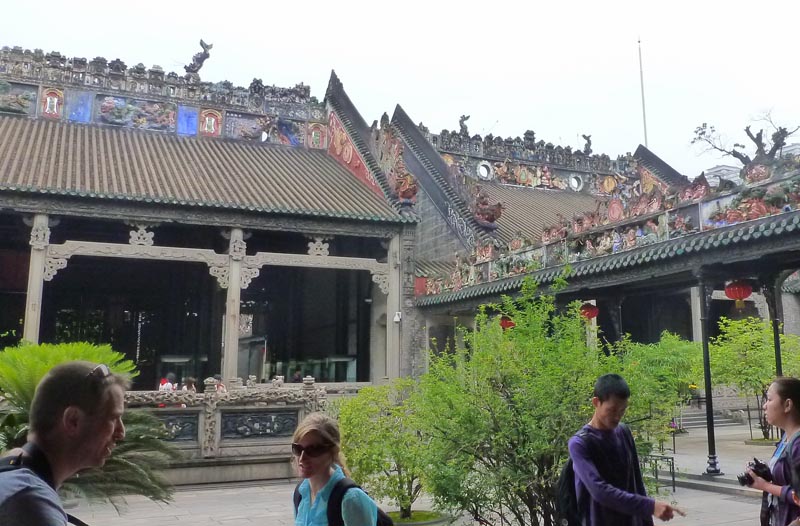
- This is a figuring of a Chinese rich man smoking opium while his younger brother is reviewing the properties of their family estate. This scene is from the Chen Estate in Guangzhou. They had so much money that they decorated their roofs like this.
- After Emperor Qianlong's death in 1796, the central government
was losing its effectiveness. Chinese authorities knew opium was
dangerous to their country, but could not enforce their anti-drug laws.
- Britain totally ignored the authority of Chinese government and started
selling opium to Chinese, using the port of Guangzhou.
While the central government was incompetent to do anything about the opium
abuse, there were many local officials who felt something had to be done
to stop the opium trade.


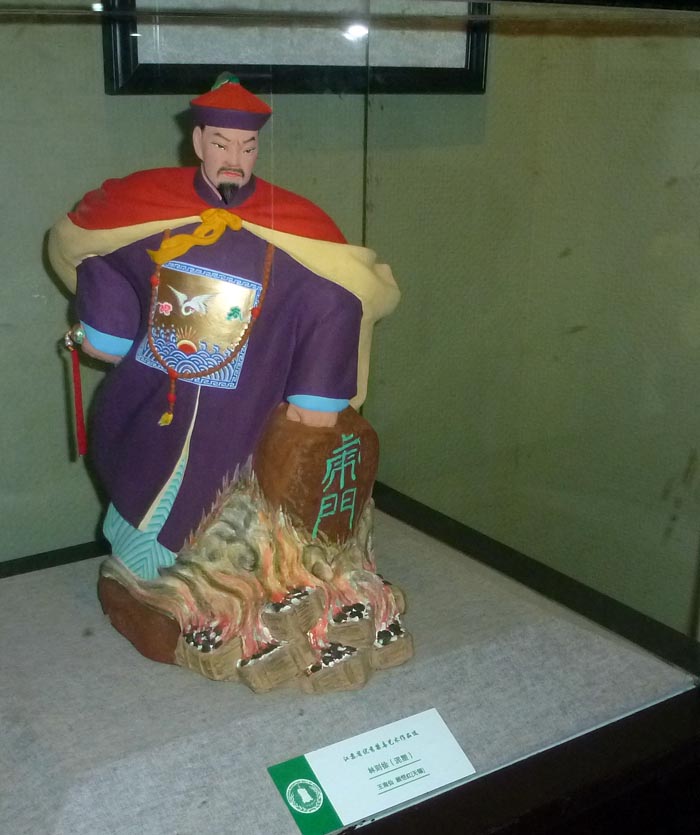
- Lin Zexu
was the governor general of the southern provinces. Without
authorization from the central government, he arrested all opium dealers
and burnt a stockpile of opium products in British possession. Using
Lin's action as an excuse, Britain started the war against China in 1939
which lasted until 1842. There was another war from 1856 to 1860, because
of China's treaty violation.
- The best place to learn about this war is the the Opium War Museum in
Nanjing. Here are some photos.
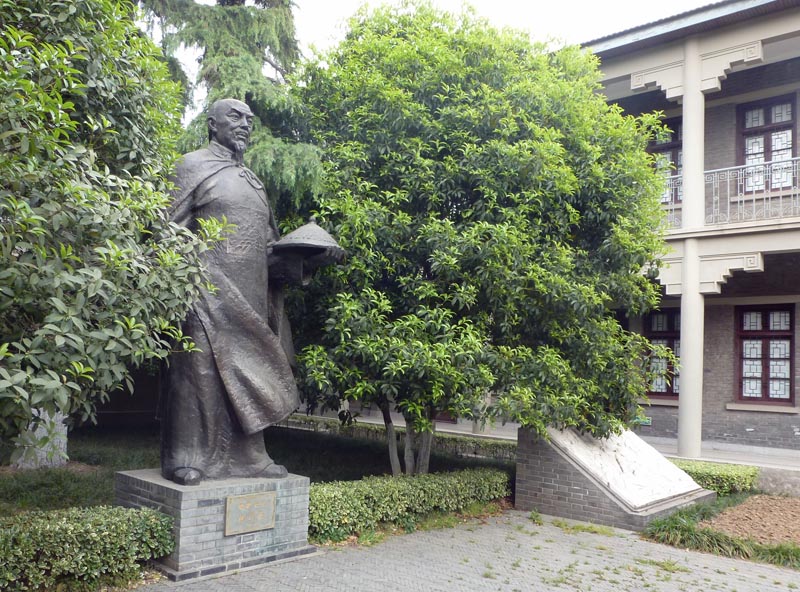
- Opium War Museum in Nanjing with a statue of Lin Zexu.
- According to this plate, the Qing Dynasty proclaimed law forbidding opium in 1729. In 1939, Lin Zexu, the governor general of Guangdong Province, destroyed the opium stockpiles belonging to illegal British merchants. This started the first Opium War.
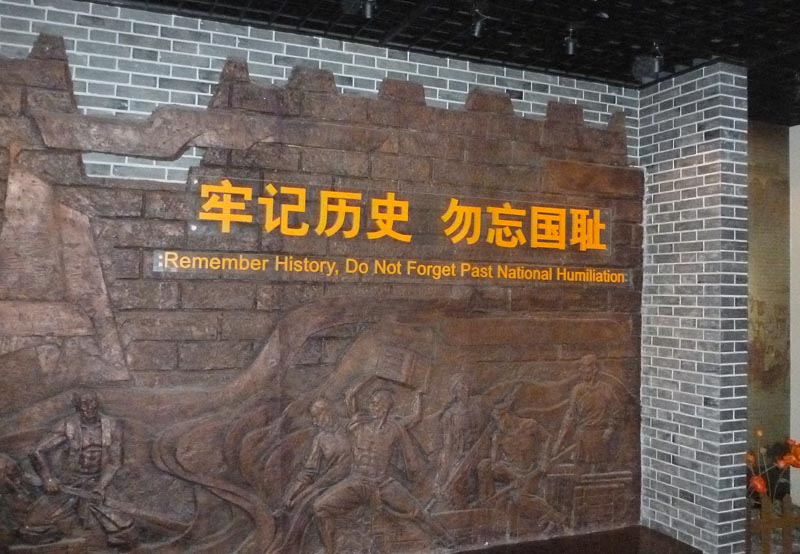
- The Museum says "Remember History. Do not forget Past National Humiliation."
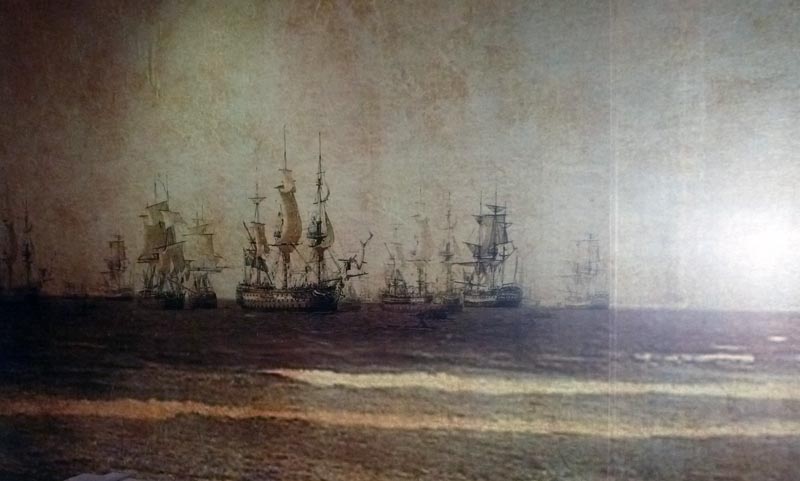
- British naval fleet approaching China's southern coast.
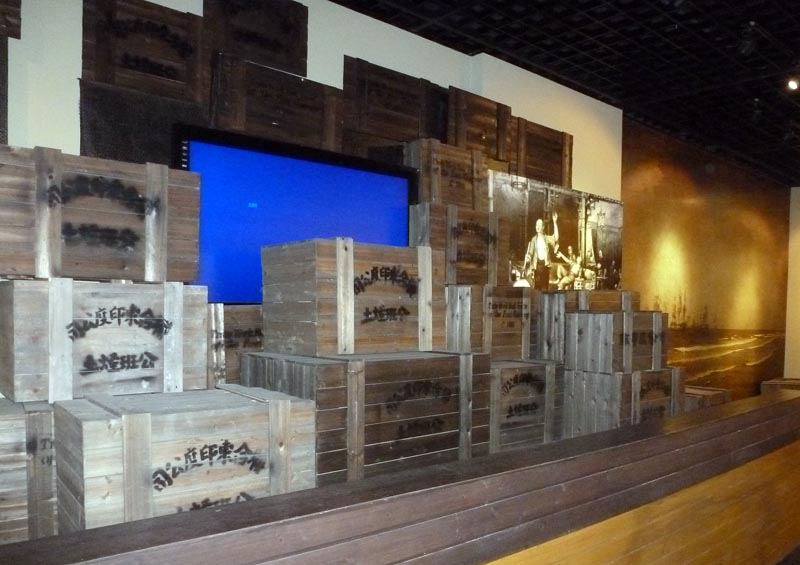
- Boxes of opium unloaded from the British ships. These boxes are coming from India under British control.
- Figurings of Chinese opium smokers.
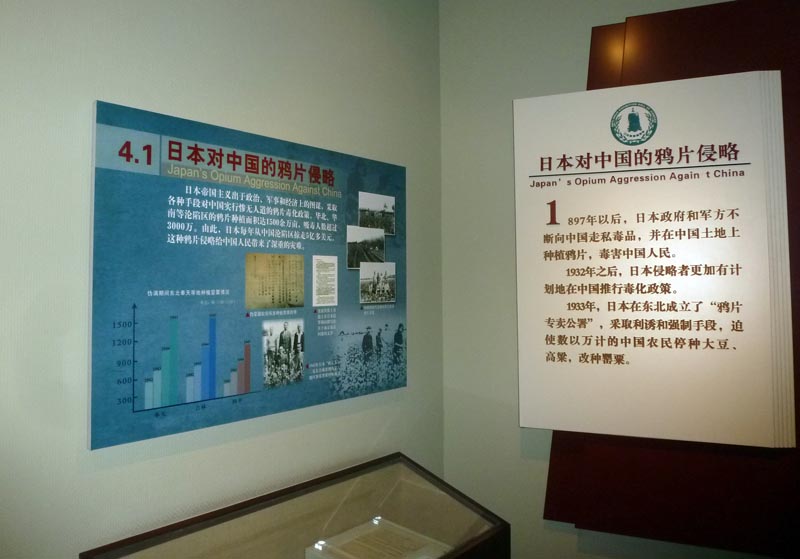
- Japanese also used opium as an instrument of their invasion of China.
As a consequence, China had to open its door completely to British commercial ventures. In addition, Britain obtained the territorial concession on the Hong Kong district. Hong Kong was under British control until 1997.
|
Hong Kong's Colonial Period
- Under the British colonial rule, Hong Kong was developed to become
an English-speaking city. The purpose
of this city was to control the economy of the south-eastern Asia,
and eventually to extend the British influence to China.
However, their operation was interrupted by the Japanese invasion during the second Sino-Japanese War (1937-45). After 1945, Britain regained the control over this colonial territory. After communist took over the Chinese government in 1949, the British government immediately recognized the communist government as the legitimate government of China, while the United States continued supporting the Chiang Kai-Shek's government in Taiwan until 1978.
In so doing, Britain was able to avoid armed conflicts with the communist and maintain business interest in other countries in asia. I assume there were enough informal trades with China, even though there were ideological differences. People have to eat something to live in this world, but they cannot eat ideology.
- From the Chinese point of view, it is better to leave Hong Kong
under British rule. They knew they had to catch up with the
Western world, and Hong Kong lease was going to expire in 1977.
Thus, the period of 48 years is a very brief moment in Chinese
history. They also knew that, after 1997, everything in Hong Kong
would belong to them.
- Hongkong Shanghai Bank was established in 1865 as a financial
instrument of the British Empire. It had a brief interruption
during the second world war, but continued growing even after the
communists took over the Chinese government. Even though they were
communists, they were money-worshipping Chinese.
| |
| |
| | |

| |
|
Hong Kong after Deng Xioping
-
After Deng Xioping's started his open-door policy in 1982, Hong
Kong became one of the two major investment centers for China.
The other place is Shanghai.
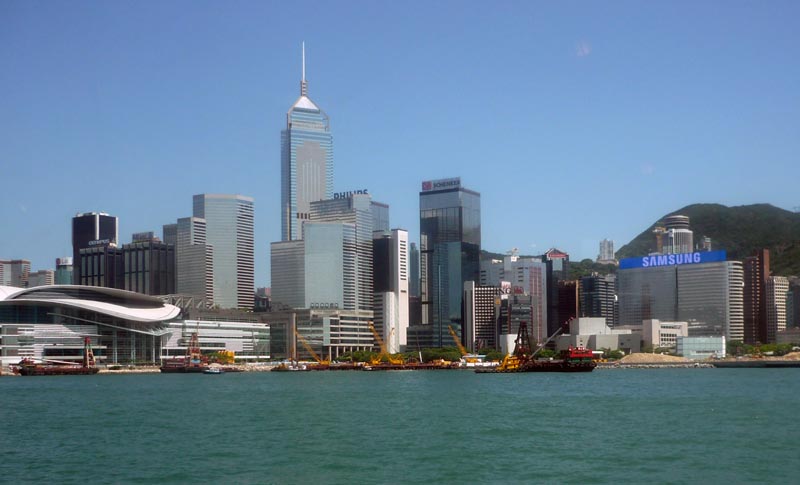
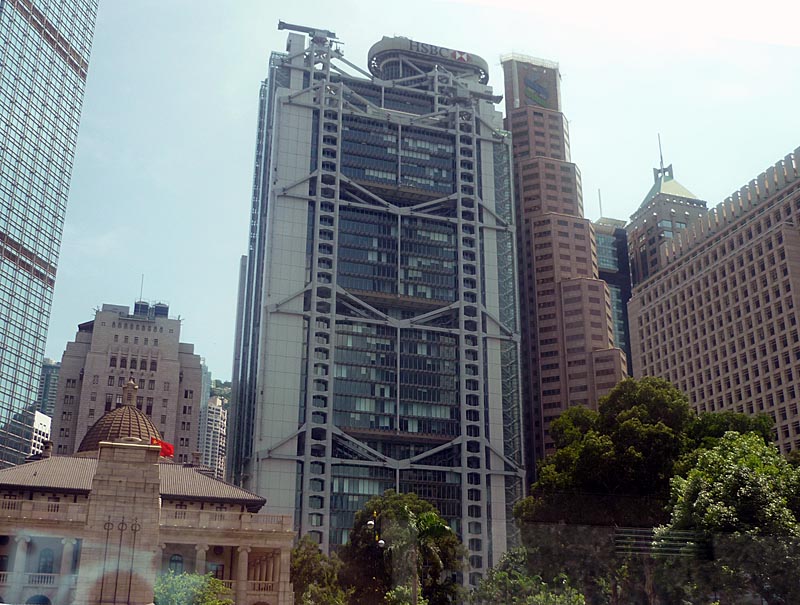
- The most tangible ones are those high-rise buildings
mostly for financial operations. Let us look at some photos.
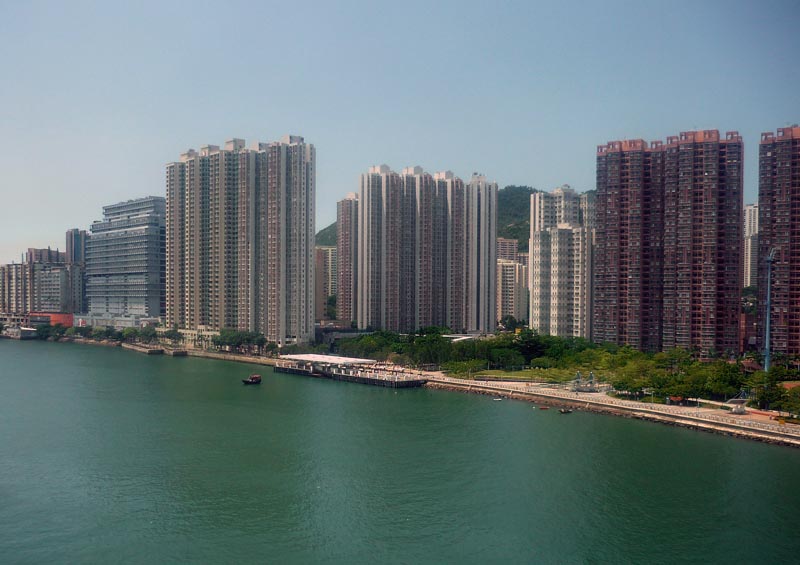
- Hong Kong is the most densely populated area on earth. The
only way to grow is to the sky. In so doing, Chinese engineers
in Hong Kong developed the technology of building high-rise
buildings. This technology of course came from the West. These
days, Chinese in mainland are using the Hong Kong technology
to construct high-rise buildings throughout China. Let us look
at some photos.
- High-rise residential buildings.
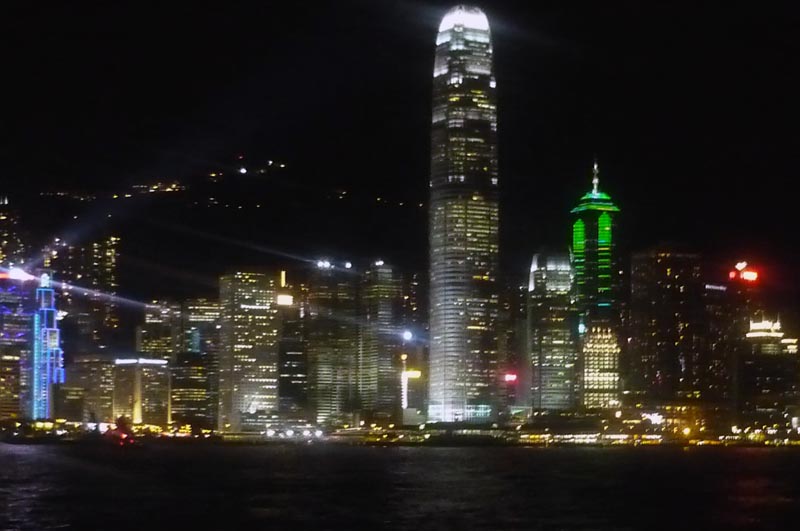
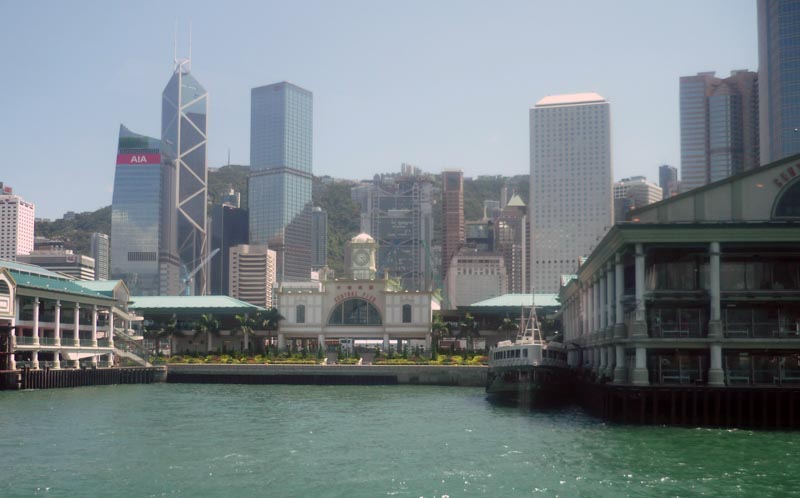
- Financial District seen from the Victoria Harbor which separates the Hong Kong Island from the Kowloon Peninsula.
- One of the docks for ferry boats connecting the Hong Kong island with the Kowloon Peninsula.
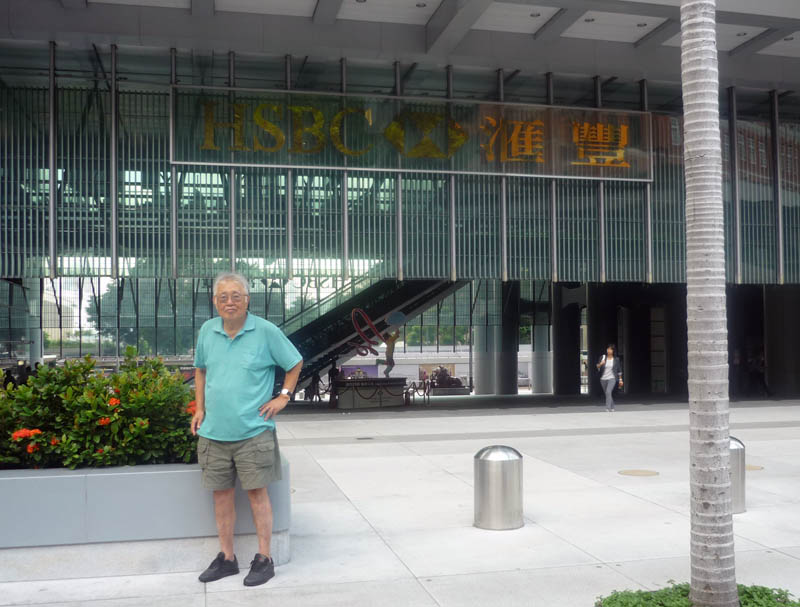
- HSBC Headquarters in Hong Kong. HSBC beans Hong Kong and Shanghai Bank Corporation. This is one of the largest banks in the world. In this photo, I am standing at the entrance to this building.

Hong Kong Breakfast consists of Chinese noodles and British fried eggs. Excellent combination!

This young lady is working for one of the major banks in Hong Kong. When I asked her whether she wants to marry a rich man or a smart man, she said "smart man." She said there are many smart physicists working in her financial world. - How about eating habits? Chinese enjoy eating. Look at
so many Chinese restaurants throughout the world. Did
British rule change the food? A little bit. Let us look at
the Hong Kong breakfast. Toast and fried eggs are added to
the traditional bowl of rice. Wonderful combination!
I am thinking of opening a breakfast shop in the United States selling Hong Kong breakfasts in the morning!
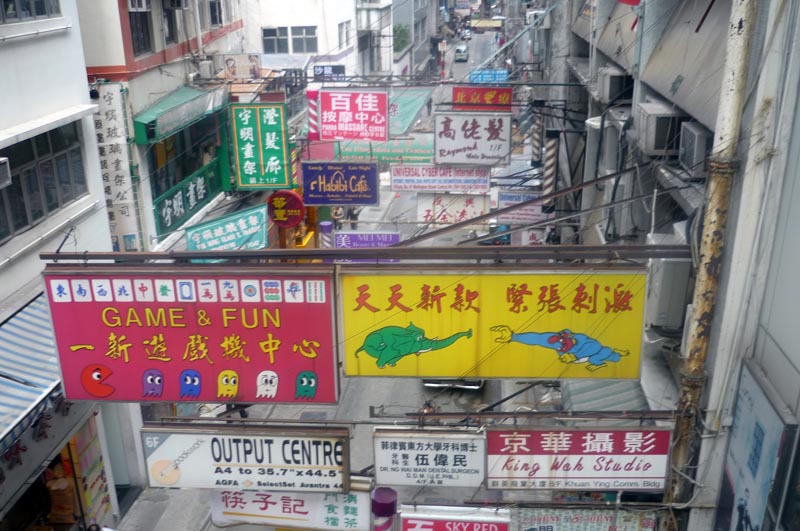
- After all, they are Chinese. They like to live in the
Chinese way. Let us see some photos.
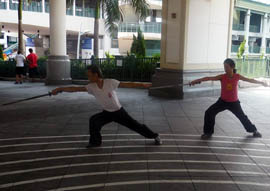
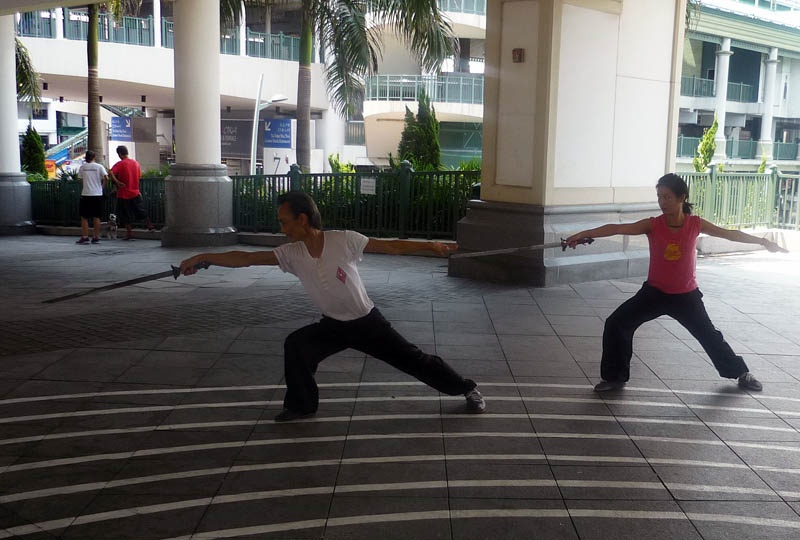
- Chinese love martial arts.
- Traditional shopping street.
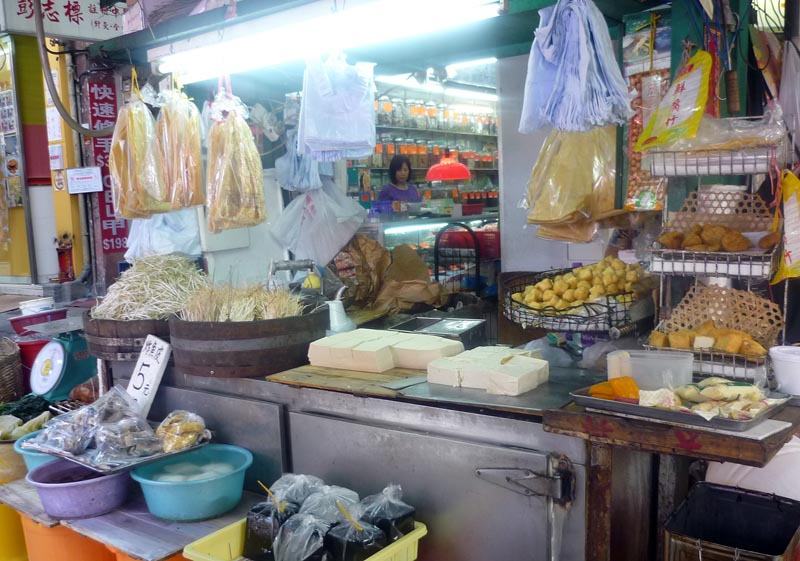
- Chinese grocery store.
- Taoist Temple.
- Traditional Medical Clinic.
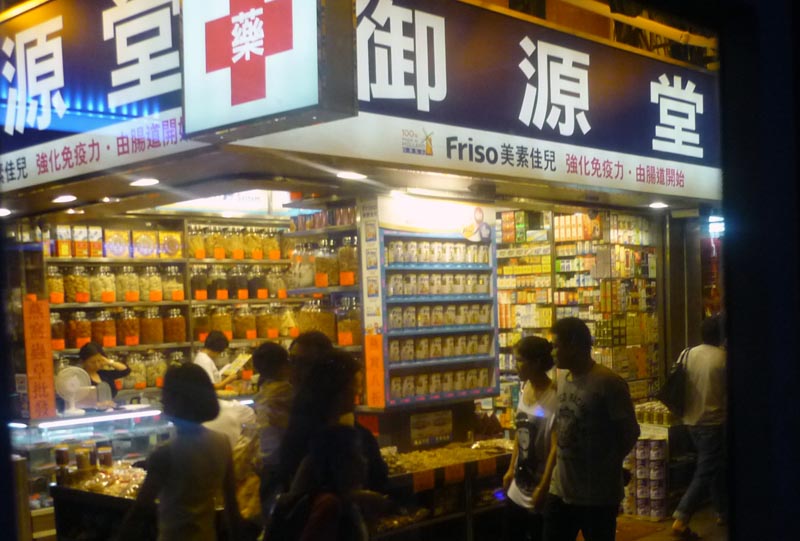
- Traditional Pharmacy.
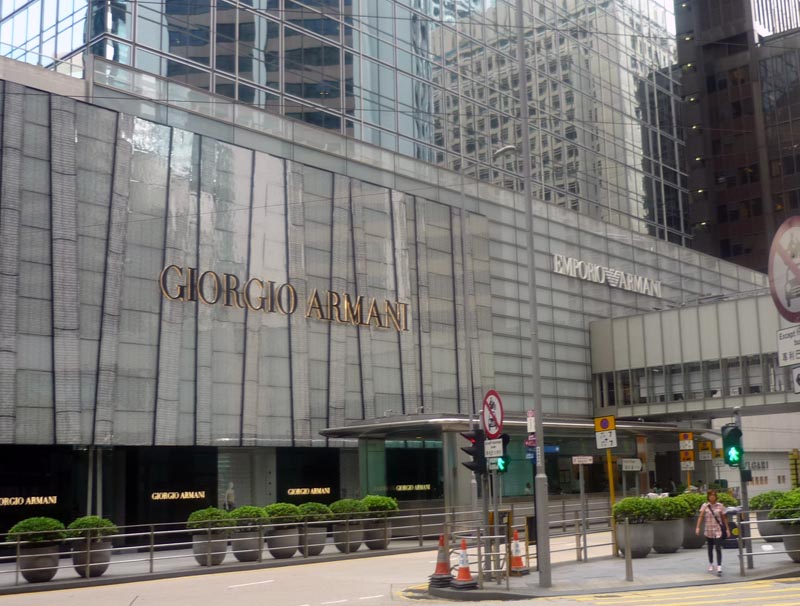
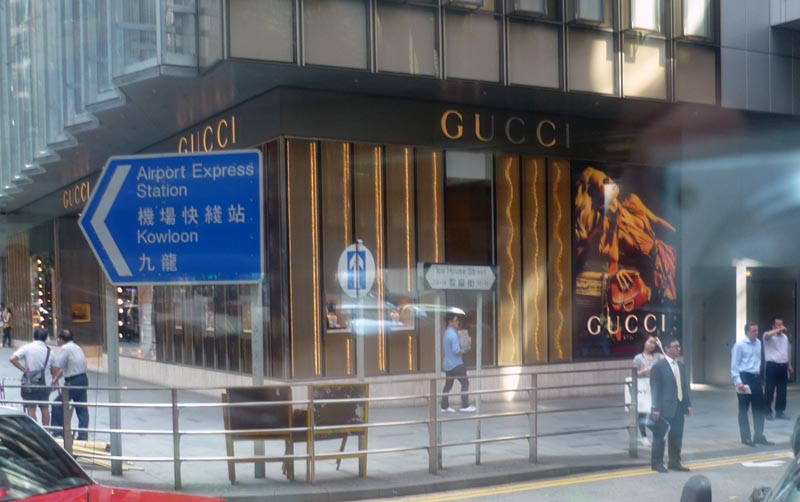
- Chinese love luxury items and name brands. There are enough
luxury shops in Hong Kong
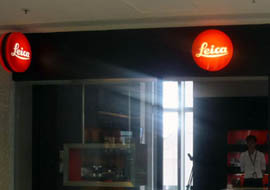
- Leica Camera store. Leica cameras are expensive and not many people buy them. Thus, it is not possible to run a shop selling only Leica items. It seems possible in Hong Kong.
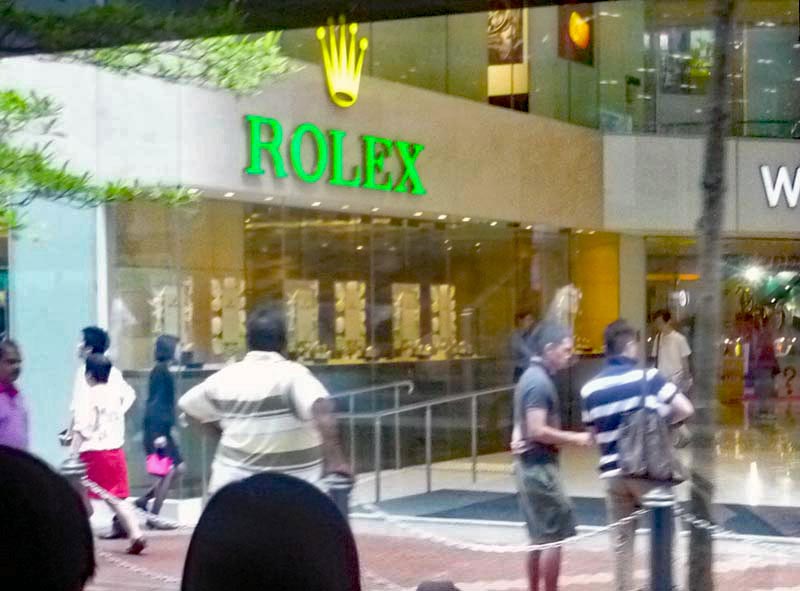
- Rolex watches. There are many stores selling only Rolex watches.
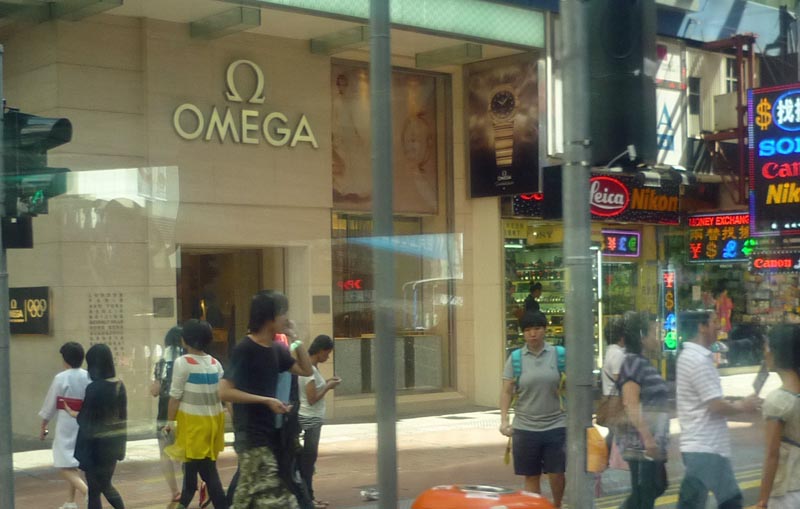
- Omega watches.
- Giorgio Armani.
- Gucci.
- Hong Kong is a city of money. Then there comes an important
question. Is the money everything to Chinese? Not to every
Chinese. I was sitting next to
- this young Chinese lady on an airport express train in Hong Kong (August 2011). She is working for one of the major banks in Hong Kong as a financial analyst. I asked her whether she wants to marry a rich man or a smart man. She said "smart man." She said there are many physicists working in the financial industry, and they are all smart. She was born in Shandong Province (south-east of Beijing), studied in Singapore, and speaks fluent English. Physicists have their place in China.

| |
| |
|







copyright@2013 by Y. S. Kim. Photos are taken by Y. S. Kim or from the public domain, unless otherwise specified. Click here for his home page.