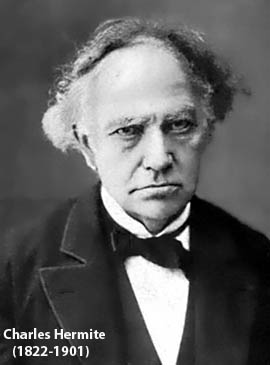
Charled Hermite
Can you do quantum mechanics without him?
- You use his mathematical instruments whenever you do quantum
mechanics, namely Hermitian operators, Hermitian matrices, and
Hermite polynomials. How much do you know about him?
- He was born in 1822 and died in 1901. Because was born with a
physical defect in his right leg, he was not able to rise
rapidly in Paris, even though his mathematical talents were well
appreciated by his colleagues.
- He was on the faculty of Ecole Poytechnique from 1862 to 1978.
- He was born in 1822 and died in 1901. Because was born with a
physical defect in his right leg, he was not able to rise
rapidly in Paris, even though his mathematical talents were well
appreciated by his colleagues.
- He then joined the faculty of Sorbonne in 1869 and
stayed there until 1897.
-
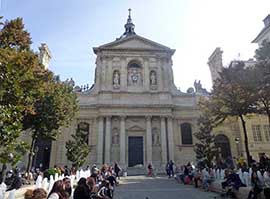
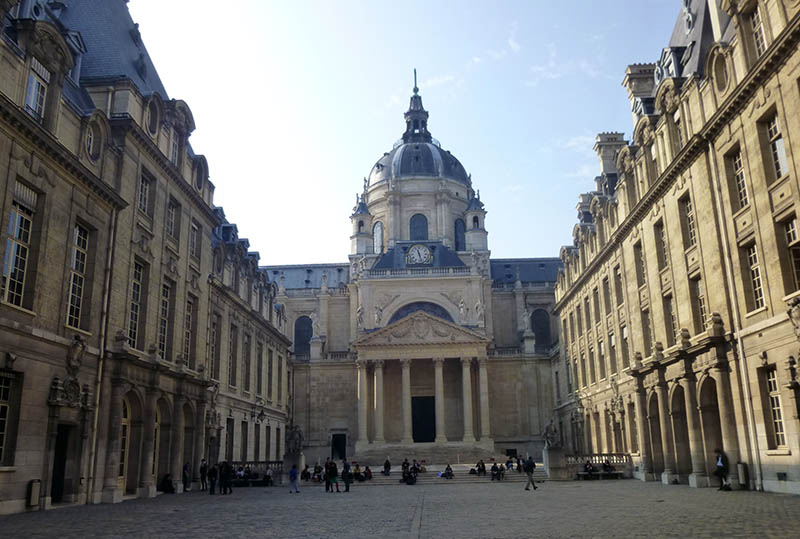
In 1892, the Paris academic community gave him a big celebration
of his 70th birthday at
Sorbonne's courtyard.
- Here is a map of the courtyard.
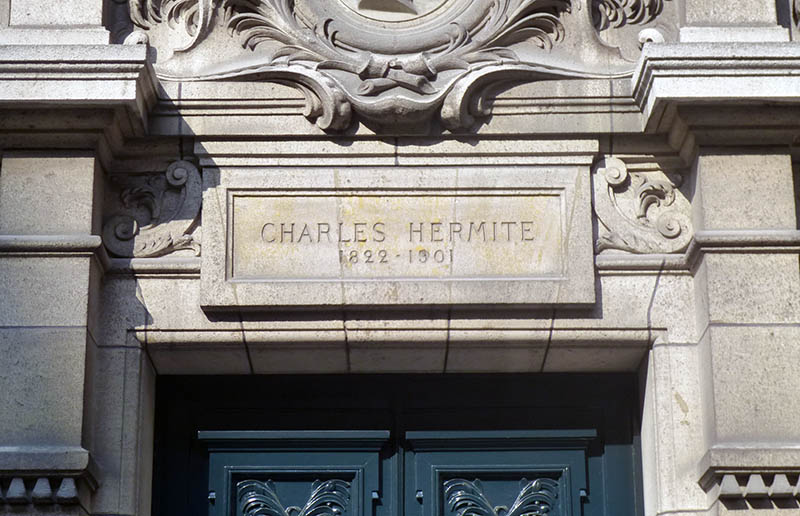
- From the courtyard, one of the gates leading to classrooms is named after him.
-
In 1892, the Paris academic community gave him a big celebration
of his 70th birthday at
Sorbonne's courtyard.
- He had a joint appointment at the Ecole and Sorbonne from
1869 to 1878. At the Ecole, Hermite had a brilliant student
named
-
Henri Poincaré (1854-1912).
- Hermite and Poincaré worked
together from 1873 to 1975.
- According to Paul A. M. Dirac's 1949 paper entitled
Forms of Relativistic Dynamics dedicated to
Einstein on his 70th birthday,this world is governed by TEN generators of the Poincaré group. Seven of them are Hermitian and are associated with the dynamical quantities, namely four space-time translations and three rotations. The remaining three are non-Hermitian, and they are the generators of the Lorentz boosts.
- There are no measurable dynamical quantities associated with those non-Hermitian generators. On the other hand, in addition to the Lorentz boost, those generators lead to many observable physical effects, including squeezed states of light, entanglements, symmetries of the Poincaré sphere. We expect more symmetry effects of those non-Hermitian generators in the future. Like to see some unusual applications? Click here.


-
Henri Poincaré (1854-1912).
- If you do not wish to hear my physics talk, it is OK.
You may still be interested in photos of Sorbonne and Paris. Sorbonne of course has its rich history.
Let us look at some Sorbonne photos.
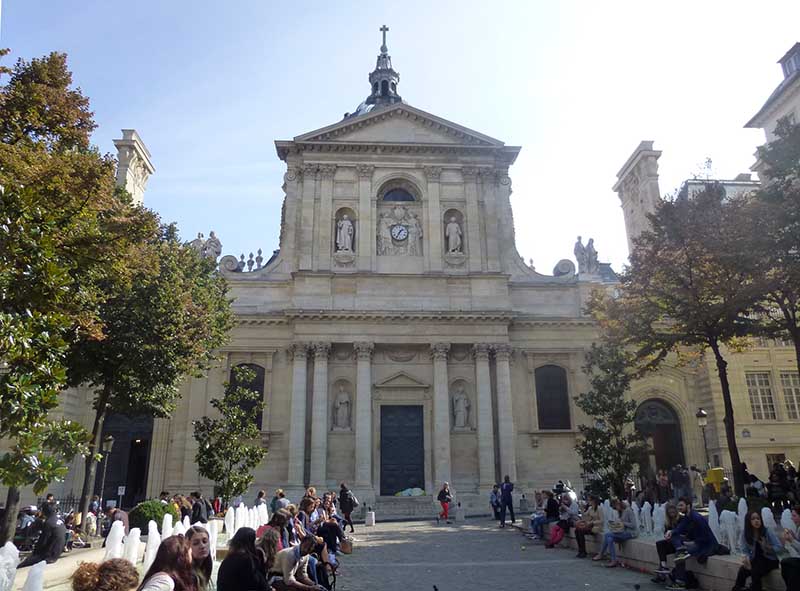
- Main entrance to the Sorbonne. Security is tight. You need an ID to go through this gate (next to the black door).
- Another gate one block north of the main entrance. This gate is open to the public. Inside the gate is the main quadrangle of the campus. However, you are not allowed to the classroom areas.
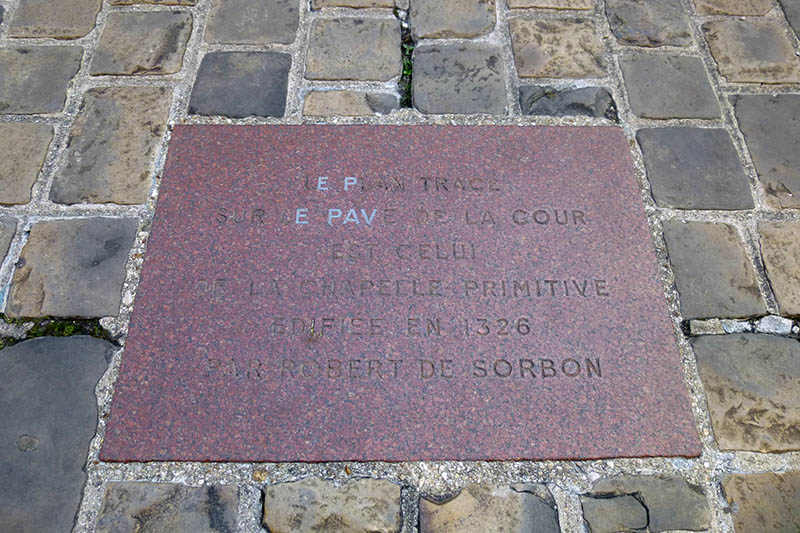
- This plaque says this University was set up in 1326 AD.
- Victor Hugo's stature is there. I have an interesting story to tell you about Hugo.
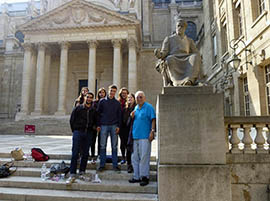
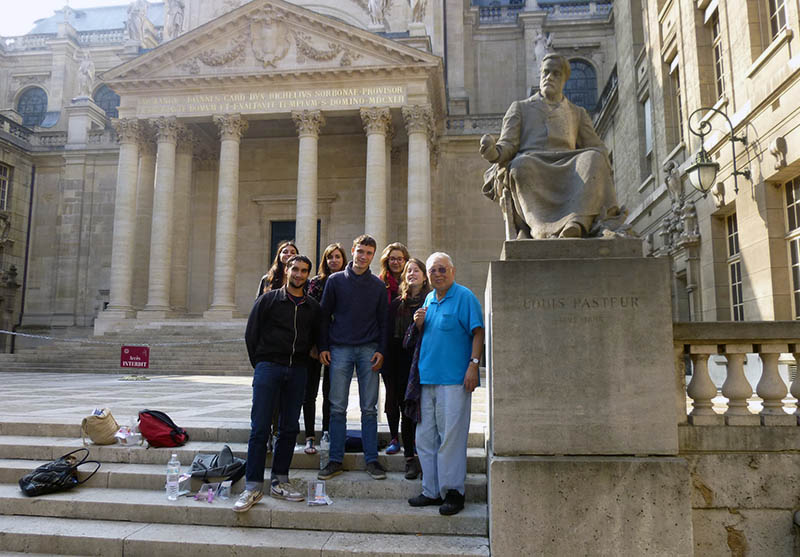
- Louis Pasteur's statue is also there. Next to this statue, a number of students were sitting on the steps. I told them to get up to have a photo with me. They all did. Very courteous ladies and gentlemen. Do you know who Pasteur was? Click here.
- Entrance to a big lecture hall.
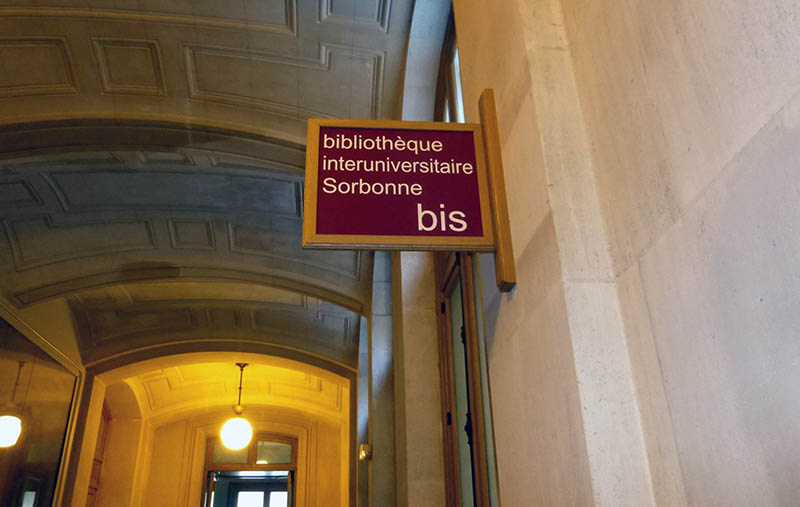
- Entrance to the Library.
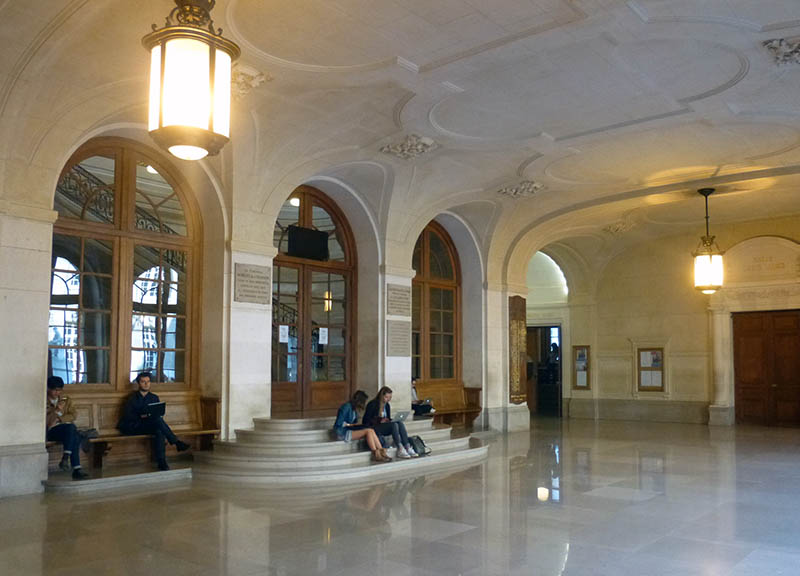
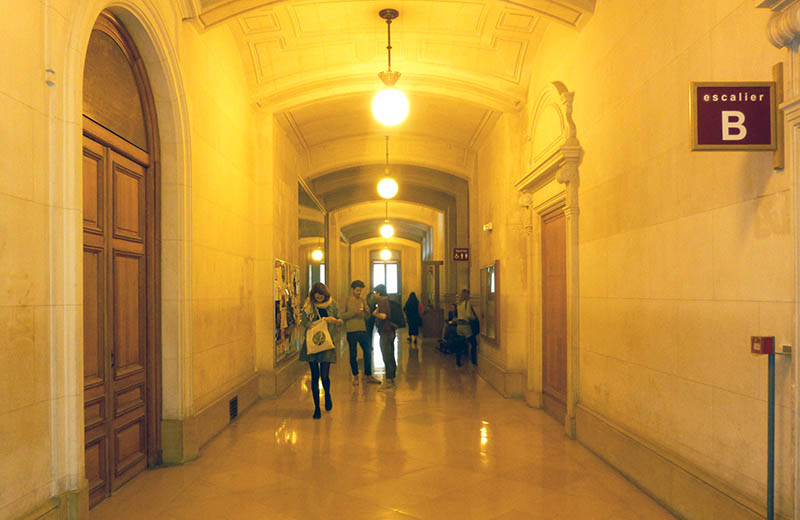
- Corridor leading to classrooms.
- The quadrangle is surrounded by buildings.
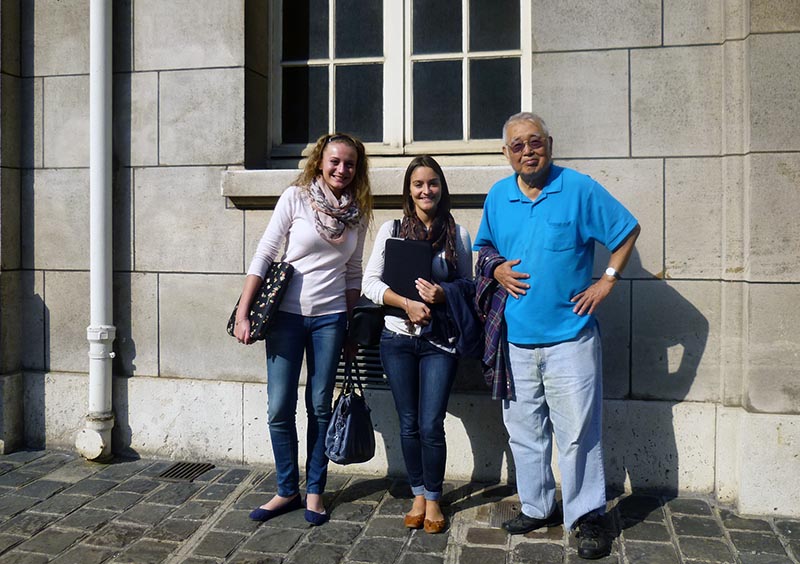
- It is always a pleasure for me to have photos with young students.
- One of those doors was dedicated to Charles Hermite. I was very happy to have my photo at this door. Can you do quantum mechanics without Hermitian operators, Hermitian matrixes, or Hermite polynomials?
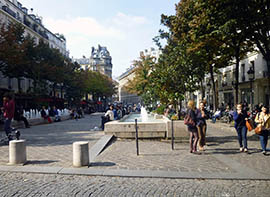
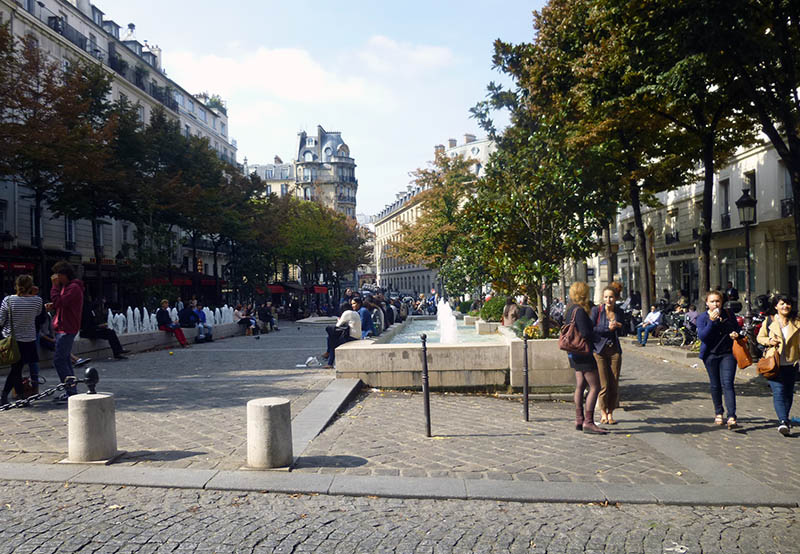
- Place de la
Sorbonne is an open space between the Sorbonne Castle and
Blvd St. Michel. The place is called "Sorbonne Square" in English.
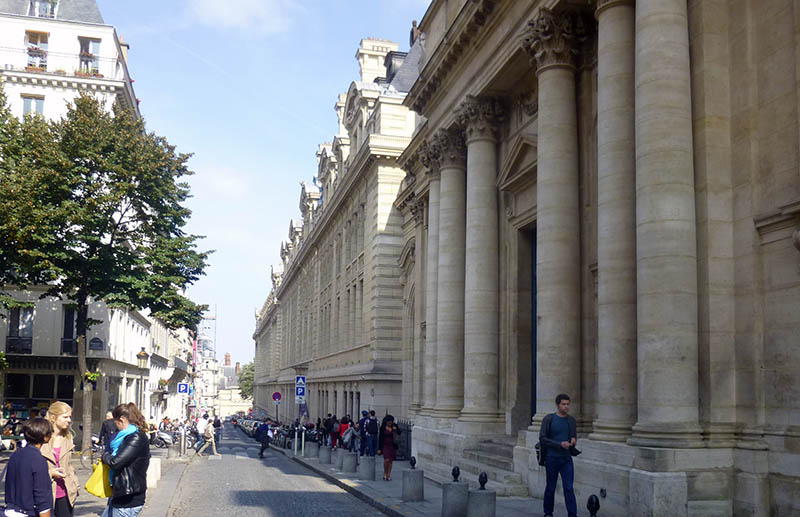
- This is the western wall of
the Sorbonne Castle. The question is why the university has to
be so separated from the rest of the world. The answer seems to
be that the University was built in 1326, and it had to be like
a monastery.
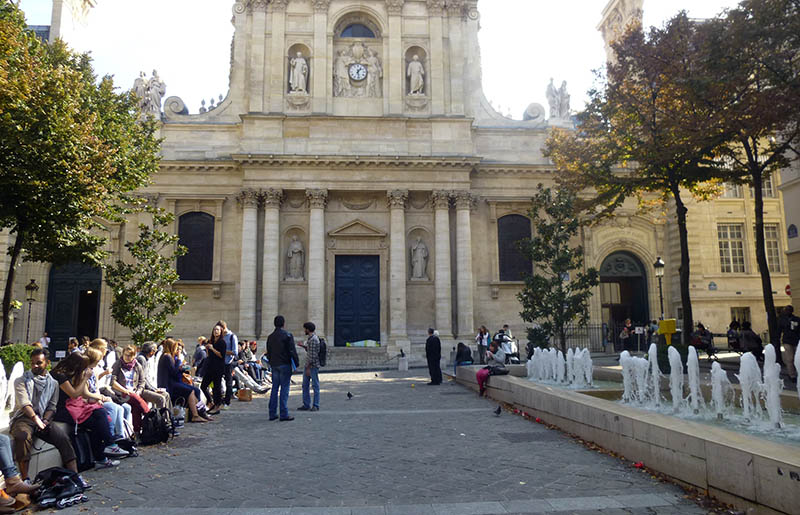
- The Square seen from the main entrance of the Sorbonne Castle.
- The main entrance seen from the Square.
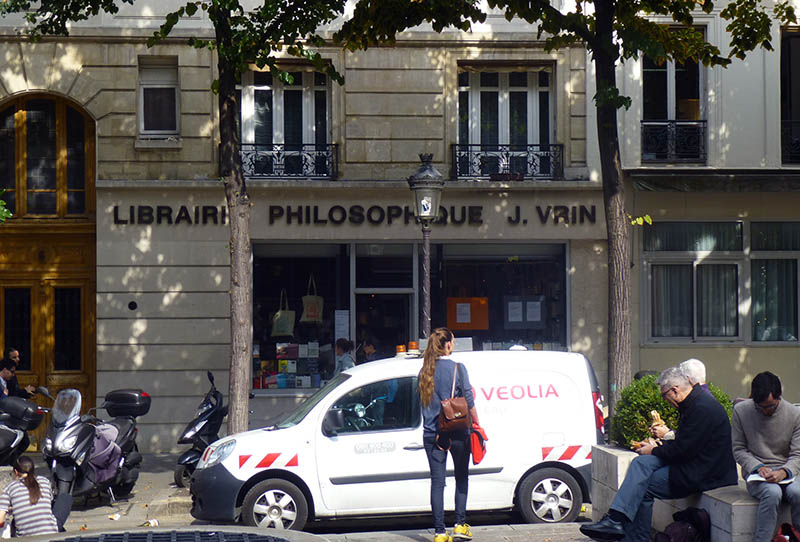
- Stores facing the Square.
- One of the book stores, showing Karl Marx's books together those of Kant and Descartes.
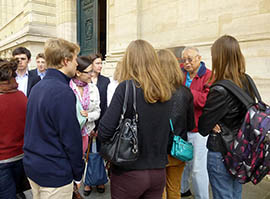
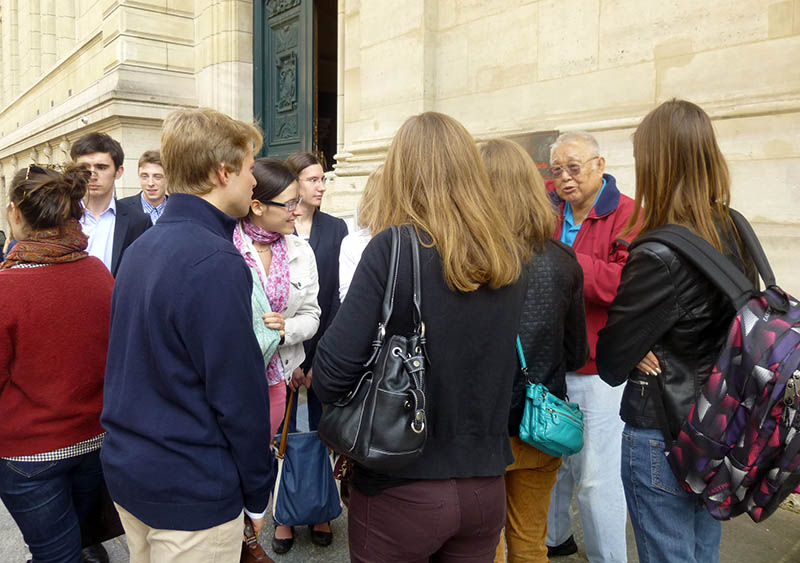
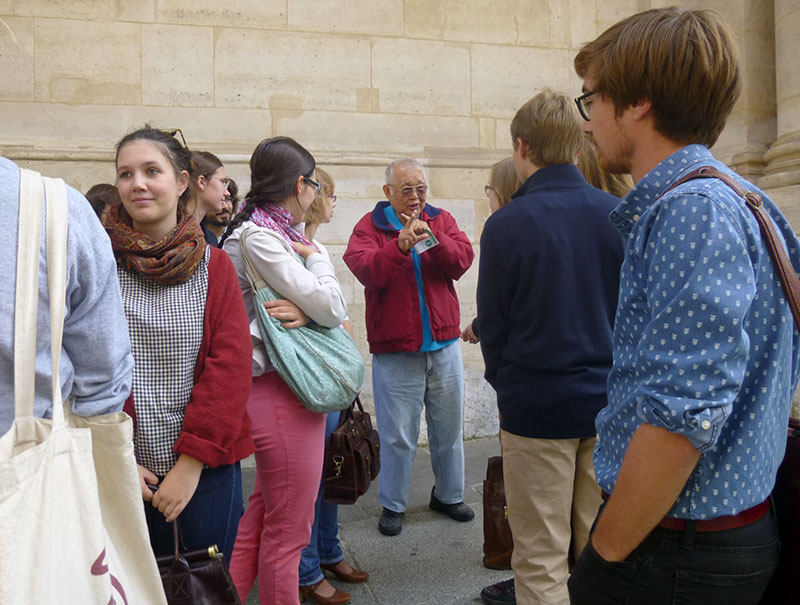
- I am giving a brief lecture to students waiting for their class hour. Here is another lecture.
- Auguste Compte was a French philosopher. I had a photo of myself next to his statute. Like to know who Compte was? Click here.
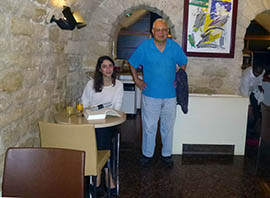
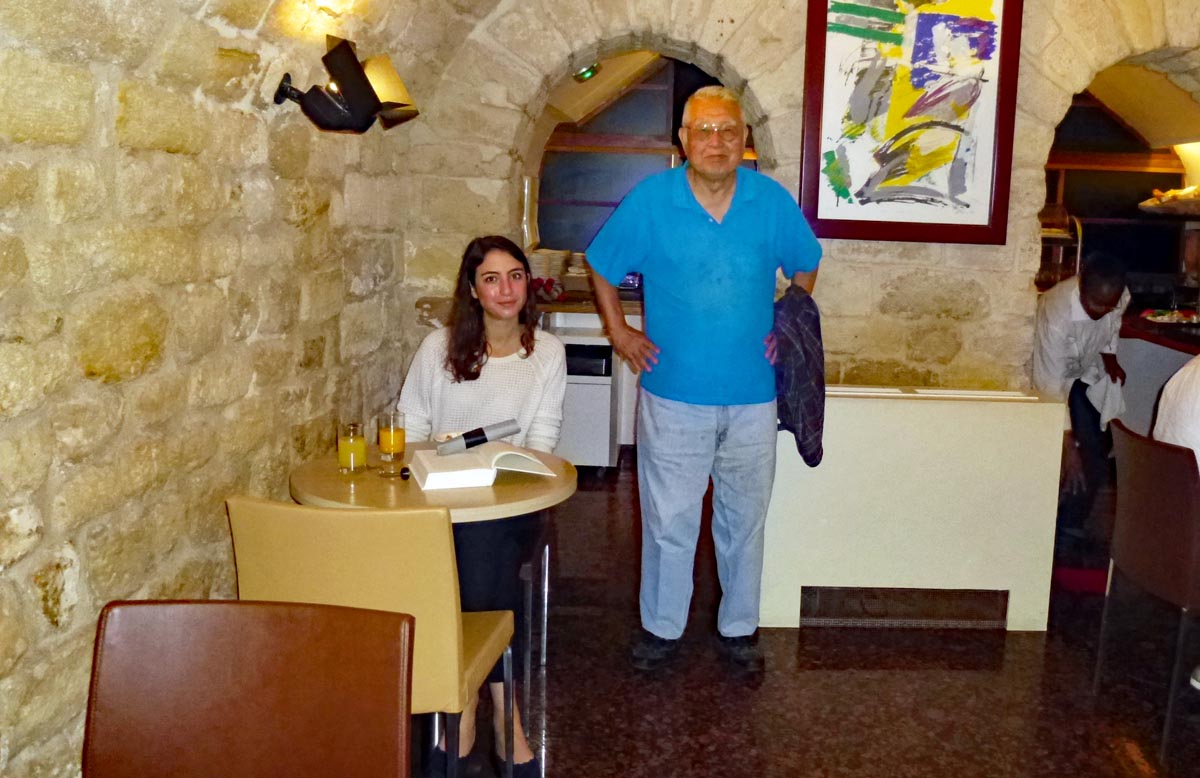
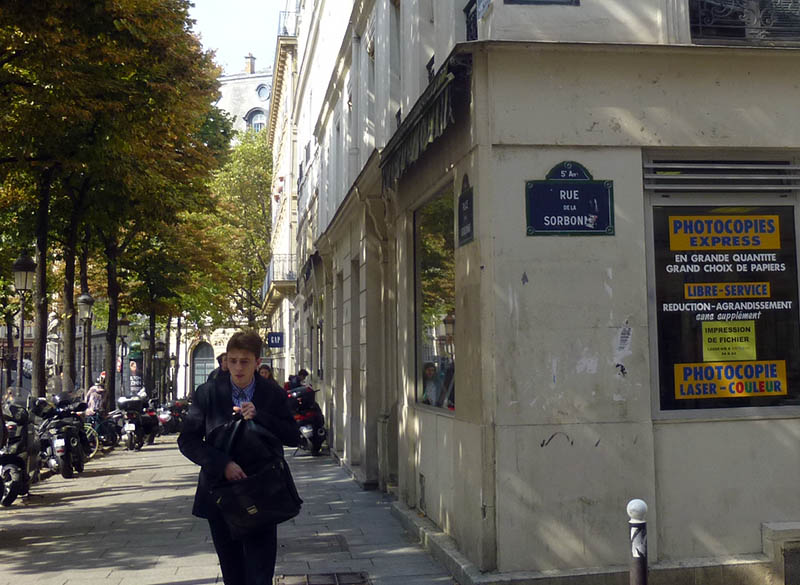
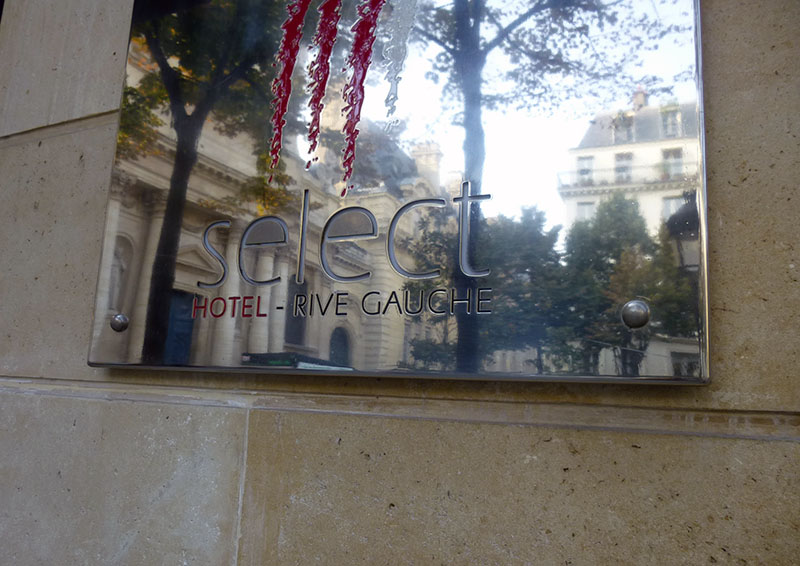
- Across the street called "Rue de la Sorbonne," there is a four-star hotel called Hotel Rive Gauche, meaning left bank of the Seine. Many visitors to the University stay there. I spent three nights there in September of 2014. The hotel has a very stylish breakfast room, and I met many interesting people there. Here is my photo with a visitor from Lebanon.
- This is the western wall of
the Sorbonne Castle. The question is why the university has to
be so separated from the rest of the world. The answer seems to
be that the University was built in 1326, and it had to be like
a monastery.
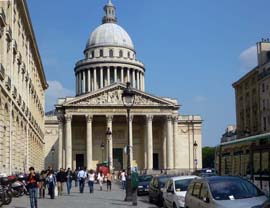
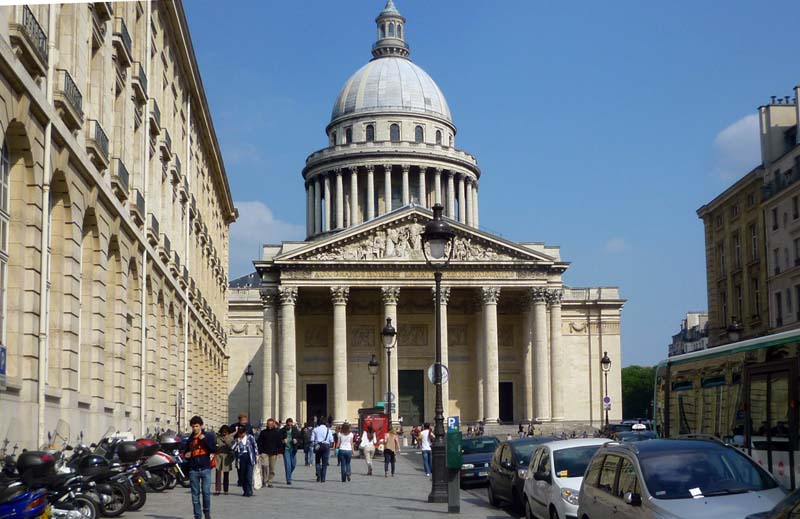
- The Pantheon is two blocks south of
the Sorbonne Castle.
The building was originally constructed as a church, but it now serves as a mausoleum
of great French citizens who made impacts on the world history.
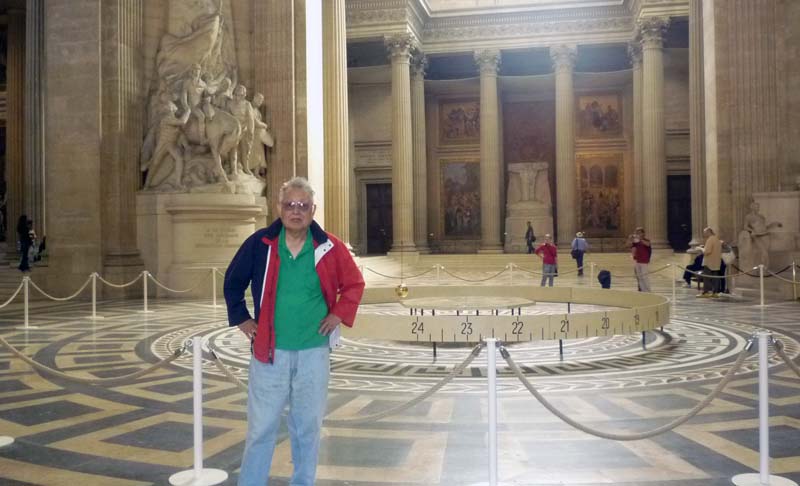
- Foucault's Pendulum. The Pantheon has a high dome. It is a great place to demonstrate this aspect of physics.
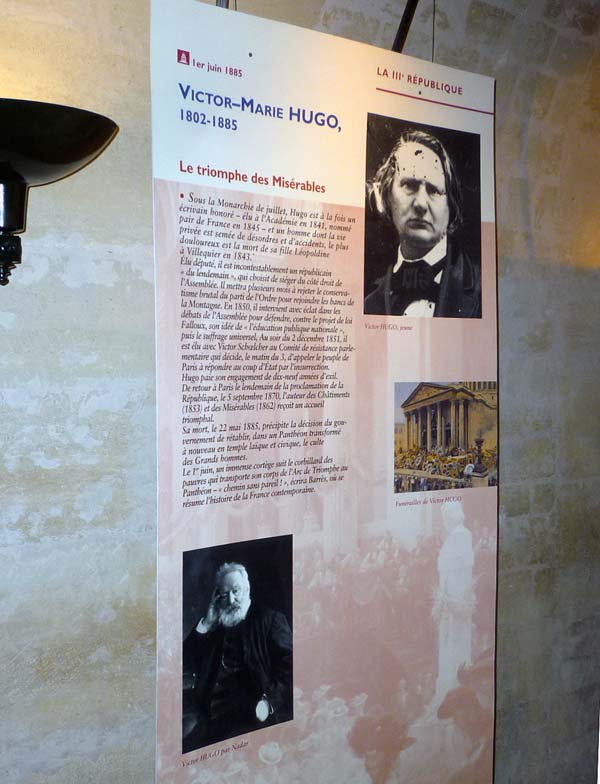
- Victor Hugo. There is a museum in Paris dedicated to him. He was born in Besancon. Click here for a story about him.
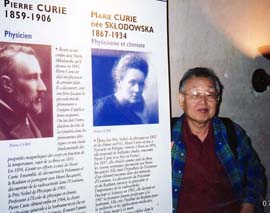
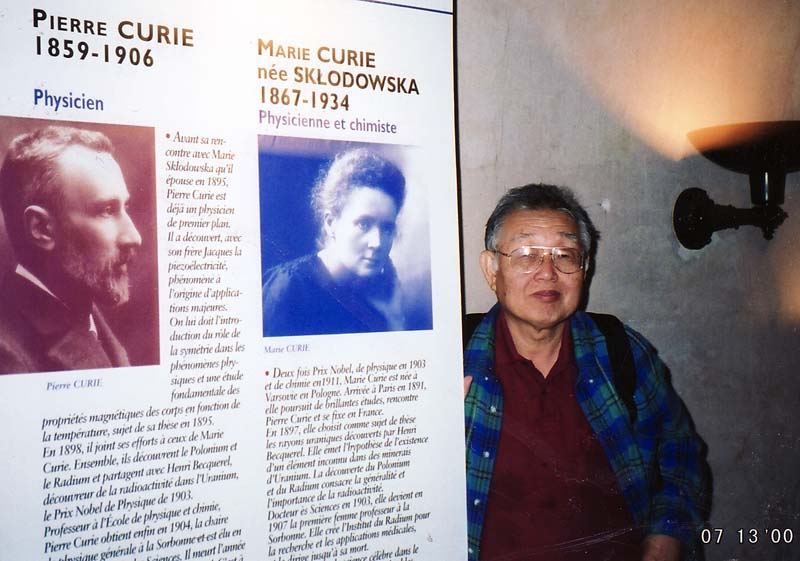
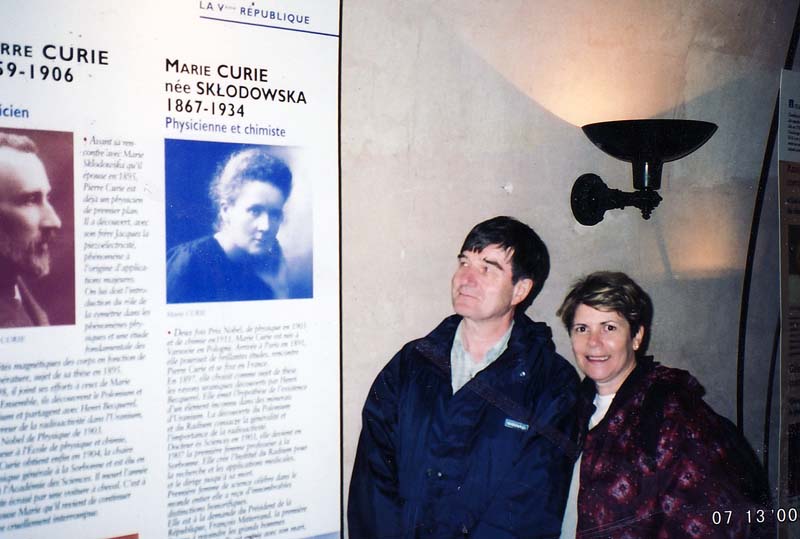
- Marie Curie was entombed with Pierre Curie. I bumped into Maurice Kibler at her tomb site. He said he was going to Iceland for vacation with his wife. It was a hot July (2002). I was attending a conference at Gif-sur Yvette. Kibler is an excellent French physicist. He is quite fond of making up funny stories.
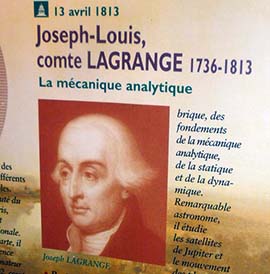
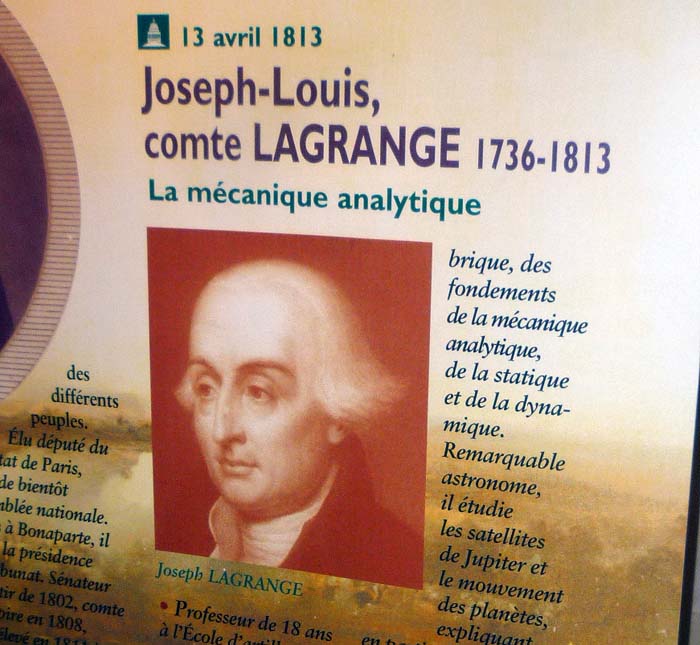
- Lagrangian Tomb. You all know
what Lagrange did. We need him for quantum field theory!!
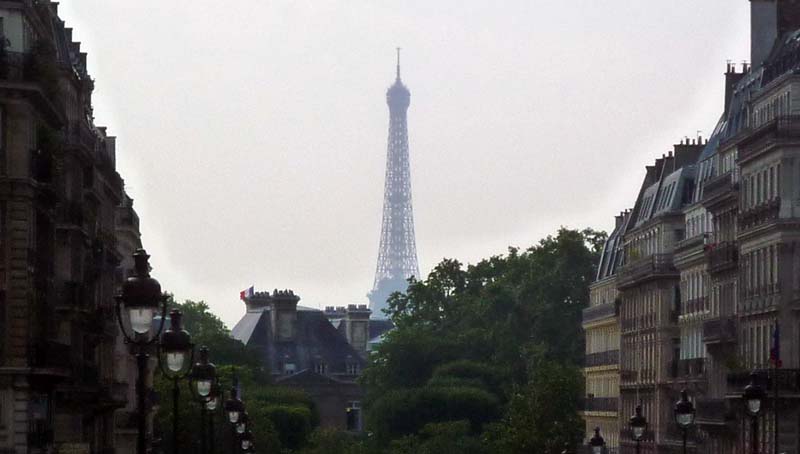
- Eiffel Tower seen from the Pantheon. This area is at a higher ground in Paris.
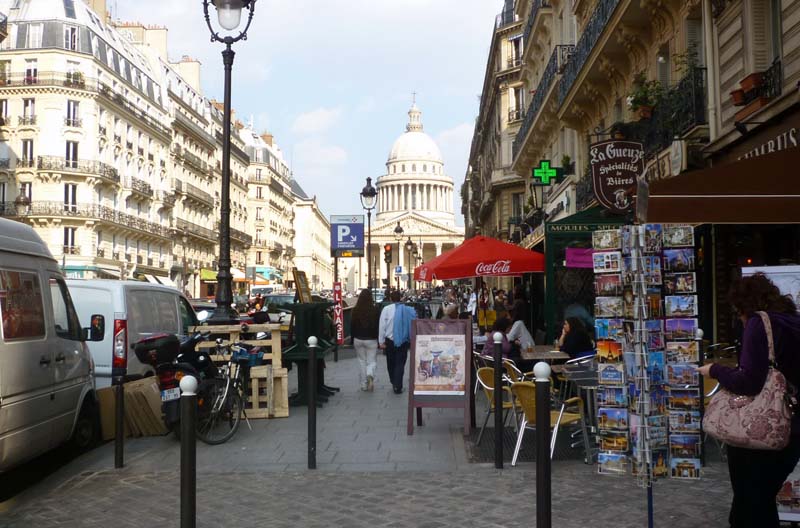
- Life is Busy on the street
leading to the Luxembourg metro station. There are many shops and cafes full of
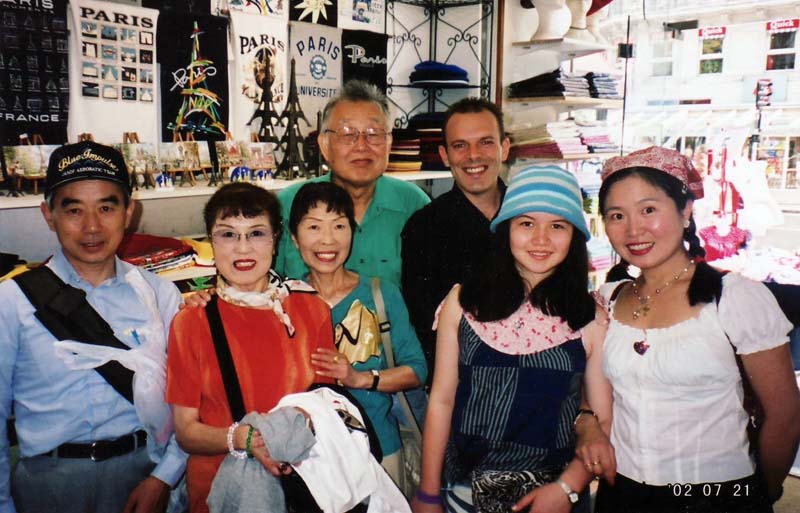
tourists. Here is my photo with
Japanese tourists in one of the gift shops.
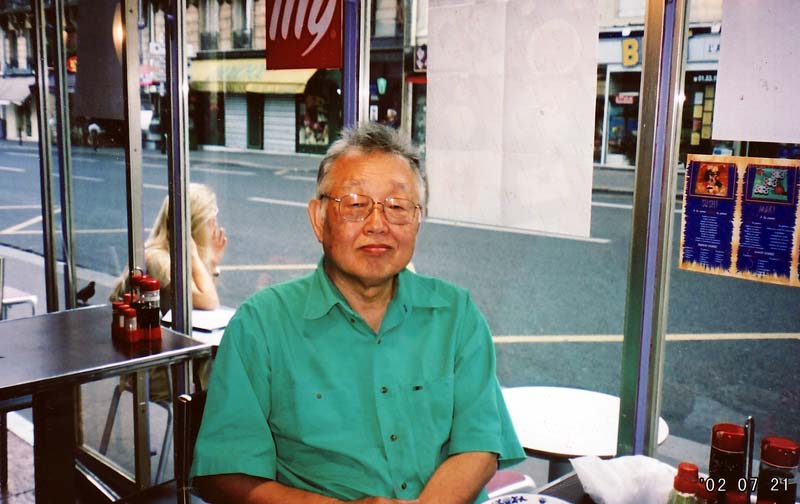
It is a quiet place in the morning. I am enjoying my breakfast there. There is a lady also enjoying her breakfast. She appears to be thinking hard about her work.
| ||

| ||
| ||

| ||
|




Click here
for the rest of Paris.
copyright@2015 by Y. S. Kim, unless otherwise specified.
Click here for his home page.